

The popularity of the all-terrain electric bike has grown rapidly in recent years. Riders no longer want an eBike that works only on city streets. Instead, they seek a machine capable of handling gravel roads, forest trails, sandy beaches, snowy paths, and urban commutes without compromise.
But what exactly makes an electric bike truly "all terrain"?
Many manufacturers use the term loosely. However, a genuine all-terrain electric bike combines powerful performance, rugged construction, advanced comfort features, and dependable safety systems. These elements work together to help riders confidently explore almost any environment.

Whether you're an outdoor adventurer, a weekend explorer, or a daily commuter who occasionally ventures off the beaten path, understanding these key features can help you choose the right eBike.
Understanding the Meaning of All-Terrain Electric Bike
An all-terrain electric bike is designed to perform effectively across multiple riding surfaces rather than excelling in only one environment.
How It Differs from Standard Electric Bikes
Traditional commuter eBikes often prioritize efficiency and comfort on paved roads. They usually feature narrower tires, lighter frames, and lower-powered motors.
In contrast, an all-terrain model includes:
- Wider tires
- More powerful motors
- Enhanced suspension
- Stronger frames
- Improved braking systems
- Larger batteries
These upgrades allow riders to tackle varied terrain with greater confidence.
Common Riding Environments
A quality all-terrain electric bike should perform well on:
| Terrain Type | Riding Challenge |
|---|---|
| Pavement | Speed and efficiency |
| Gravel | Loose traction |
| Dirt Trails | Uneven surfaces |
| Sand | Soft ground resistance |
| Snow | Reduced grip |
| Hills | Increased motor demand |
| Forest Paths | Obstacles and roots |
The ability to adapt across these environments is what separates true all-terrain bikes from ordinary models.
Feature #1 – Powerful Motor Performance
Why Motor Power Matters
Motor power serves as the heart of any all-terrain electric bike.
When riding uphill, crossing sand, or navigating rough trails, additional torque becomes essential. A weak motor may struggle, forcing riders to pedal excessively.
High-powered motors provide:
- Better hill climbing
- Faster acceleration
- Improved off-road capability
- Greater carrying capacity
Ideal Wattage for Mixed Terrain
While 500W motors can handle light trails, serious all-terrain riders often prefer:
| Motor Rating | Suitable Terrain |
|---|---|
| 500W | Urban and light trails |
| 750W | Mixed terrain |
| 1000W | Advanced off-road |
| 1500W+ | Steep hills and rugged trails |
The higher the torque output, the easier it becomes to conquer challenging landscapes.
Feature #2 – Fat Tires for Maximum Traction
Benefits of Wide Tires
Fat tires are one of the most recognizable features of an all-terrain electric bike.
Typically measuring 4 inches or wider, these tires create a larger contact patch with the ground.
Benefits include:
- Enhanced stability
- Improved traction
- Better shock absorption
- Increased rider confidence
Tire Sizes for Different Conditions
| Tire Width | Best Use |
|---|---|
| 2.0"–2.5" | Road riding |
| 3.0" | Light trails |
| 4.0" | All-terrain riding |
| 4.5"+ | Sand and snow |
Fat tires allow riders to transition smoothly between pavement and rugged trails without changing equipment.
Feature #3 – Advanced Suspension Systems
Front Suspension vs Full Suspension
Suspension dramatically affects ride comfort and control.
Front suspension forks absorb impacts from rocks, roots, and potholes.
Full suspension systems add rear shock absorbers, offering:
- Improved comfort
- Better traction
- Reduced rider fatigue
Comfort on Rough Trails
Without proper suspension, rough terrain quickly becomes exhausting.
Benefits include:
- Reduced vibration
- Better wheel contact
- Increased stability
- Improved handling
For riders who spend significant time off-road, suspension is one of the most valuable investments.

Feature #4 – Long-Range Battery Capacity
Battery Size and Real-World Range
An all-terrain electric bike often requires more energy than a commuter bike because rough terrain increases resistance.
Factors affecting range include:
- Rider weight
- Terrain type
- Tire pressure
- Wind conditions
- Riding mode
A larger battery ensures longer adventures without range anxiety.
| Battery Capacity | Typical Range |
|---|---|
| 10Ah | 20–35 miles |
| 15Ah | 35–55 miles |
| 20Ah | 50–75 miles |
| 25Ah+ | 60–100+ miles |
Charging Considerations
Modern lithium-ion batteries offer:
- Fast charging
- Long lifespan
- Consistent performance
Many riders prefer removable batteries for convenient indoor charging.
Feature #5 – Durable Frame Construction
Materials and Strength
A true all-terrain electric bike must withstand impacts, vibrations, and demanding conditions.
Common frame materials include:
| Material | Advantages |
|---|---|
| Aluminum Alloy | Lightweight and durable |
| Steel | Strong and affordable |
| Carbon Fiber | Extremely light but expensive |
Most quality all-terrain eBikes utilize reinforced aluminum alloy frames.
Weight Capacity Factors
Strong frames support:
- Heavier riders
- Cargo loads
- Accessories
- Off-road impacts
Look for models with high payload ratings if carrying gear regularly.
Feature #6 – Reliable Braking System
Hydraulic vs Mechanical Brakes
Stopping power becomes critical when riding at higher speeds on unpredictable surfaces.
Hydraulic disc brakes generally provide:
- Stronger stopping power
- Better modulation
- Reduced maintenance
- Improved wet-weather performance
Safety Across Terrain Types
Reliable brakes improve safety on:
- Steep descents
- Muddy trails
- Gravel roads
- Wet pavement
Never underestimate the importance of a quality braking system when selecting an all-terrain electric bike.
Feature #7 – Intelligent Riding Modes
Pedal Assist Benefits
Modern all-terrain electric bikes feature multiple riding modes.
These usually include:
- Eco Mode
- Normal Mode
- Sport Mode
- Throttle Mode
Each setting balances speed, power, and battery consumption.
Terrain Adaptability
Different terrains require different power levels.
For example:
- Eco mode for flat roads
- Sport mode for steep climbs
- Throttle mode for quick acceleration
Smart riding modes help maximize both performance and efficiency.
Feature #8 – Weather Resistance and Durability
Riding in Various Conditions
A true all-terrain electric bike should handle diverse weather conditions.
Key protective features include:
- Water-resistant electronics
- Sealed battery housing
- Rust-resistant components
- Durable cable routing
Maintenance Tips
To maintain peak performance:
- Clean after muddy rides
- Inspect tire pressure regularly
- Charge batteries correctly
- Lubricate moving parts
Proper maintenance extends lifespan and preserves performance.
For additional eBike maintenance guidance, visit the PeopleForBikes Electric Bike Resource Center.
Feature #9 – Rider Comfort and Ergonomics
Seat, Handlebars, and Positioning
Comfort matters, especially during longer rides.
Look for:
- Adjustable handlebars
- Ergonomic grips
- Wide saddles
- Upright riding positions
These features reduce fatigue and improve control.
Long-Distance Riding Experience
An all-terrain electric bike should encourage exploration, not discomfort.
Comfort improvements contribute to:
- Longer rides
- Better posture
- Reduced strain
- Enhanced enjoyment
Recommended All-Terrain Electric Bike
Why the VICTRIP R6 Pro Stands Out
Among today's all-terrain electric bike options, the VICTRIP R6 Pro Moped Style eBike stands out as a strong choice for riders seeking versatility.
Key highlights include:
- Peak 1800W motor performance
- 48V 25Ah LG battery
- 16×4.0-inch fat tires
- Hydraulic disc brakes
- Moped-inspired frame design
- Excellent hill-climbing capability
- Long-distance riding potential
The combination of power, traction, braking performance, and comfort makes it highly suitable for riders who regularly switch between city streets and off-road environments.
Whether you're commuting during the week or exploring trails on weekends, the VICTRIP R6 Pro delivers the characteristics expected from a genuine all-terrain electric bike.
Comparing All-Terrain Features Checklist
| Feature | Essential for All-Terrain? |
|---|---|
| Powerful Motor | ✅ Yes |
| Fat Tires | ✅ Yes |
| Suspension | ✅ Yes |
| Long-Range Battery | ✅ Yes |
| Hydraulic Brakes | ✅ Yes |
| Durable Frame | ✅ Yes |
| Multiple Ride Modes | ✅ Yes |
| Weather Resistance | ✅ Yes |
| Ergonomic Design | ✅ Yes |
If a bike lacks several of these features, it may not truly qualify as an all-terrain electric bike.
TOP PICK
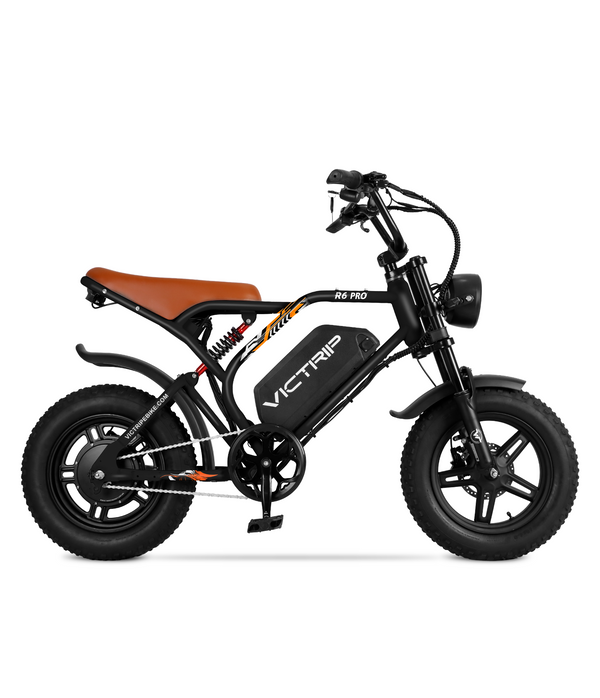
VICTRIP®R6 Pro 1500W Moped Style EBike
$1,099.00
Conclusion
A genuine all-terrain electric bike is much more than a marketing label. It combines power, durability, traction, comfort, and versatility into a single machine capable of handling a wide variety of riding conditions.
When evaluating your next eBike, pay close attention to the nine essential features discussed in this guide. A powerful motor, fat tires, long-range battery, advanced suspension, reliable brakes, and durable construction all contribute to real-world all-terrain capability.
For riders seeking a versatile option that checks many of these boxes, the VICTRIP R6 Pro Moped Style eBike offers an impressive blend of performance, comfort, and rugged design. With the right all-terrain electric bike, every road, trail, and adventure becomes an opportunity to explore farther and ride with confidence.
Frequently Asked Questions
What is considered an all-terrain electric bike?
An all-terrain electric bike is designed to ride on multiple surfaces, including pavement, dirt, gravel, sand, and snow while maintaining stability, comfort, and performance.
Are fat tires necessary for all-terrain riding?
Yes. Fat tires provide superior traction, shock absorption, and stability across varied terrain types.
How much motor power do I need for off-road riding?
For serious off-road use, most riders benefit from at least 750W to 1500W of motor power depending on terrain difficulty.
Is suspension important on an all-terrain electric bike?
Absolutely. Suspension improves comfort, control, and traction when riding over rough surfaces.
How far can an all-terrain electric bike travel on a single charge?
Range varies depending on battery capacity and riding conditions, but many models can travel between 40 and 100 miles.
Are hydraulic brakes better than mechanical brakes?
In most situations, yes. Hydraulic brakes provide stronger stopping power, smoother modulation, and better wet-weather performance.
Can an all-terrain electric bike be used for commuting?
Definitely. Many riders choose an all-terrain electric bike because it performs well both on city streets and off-road adventures.
What should I prioritize when buying an all-terrain electric bike?
Focus on motor power, battery range, tire size, suspension quality, braking performance, and overall frame durability.

Share:
Electric Dirt Bike Laws and Regulations by State
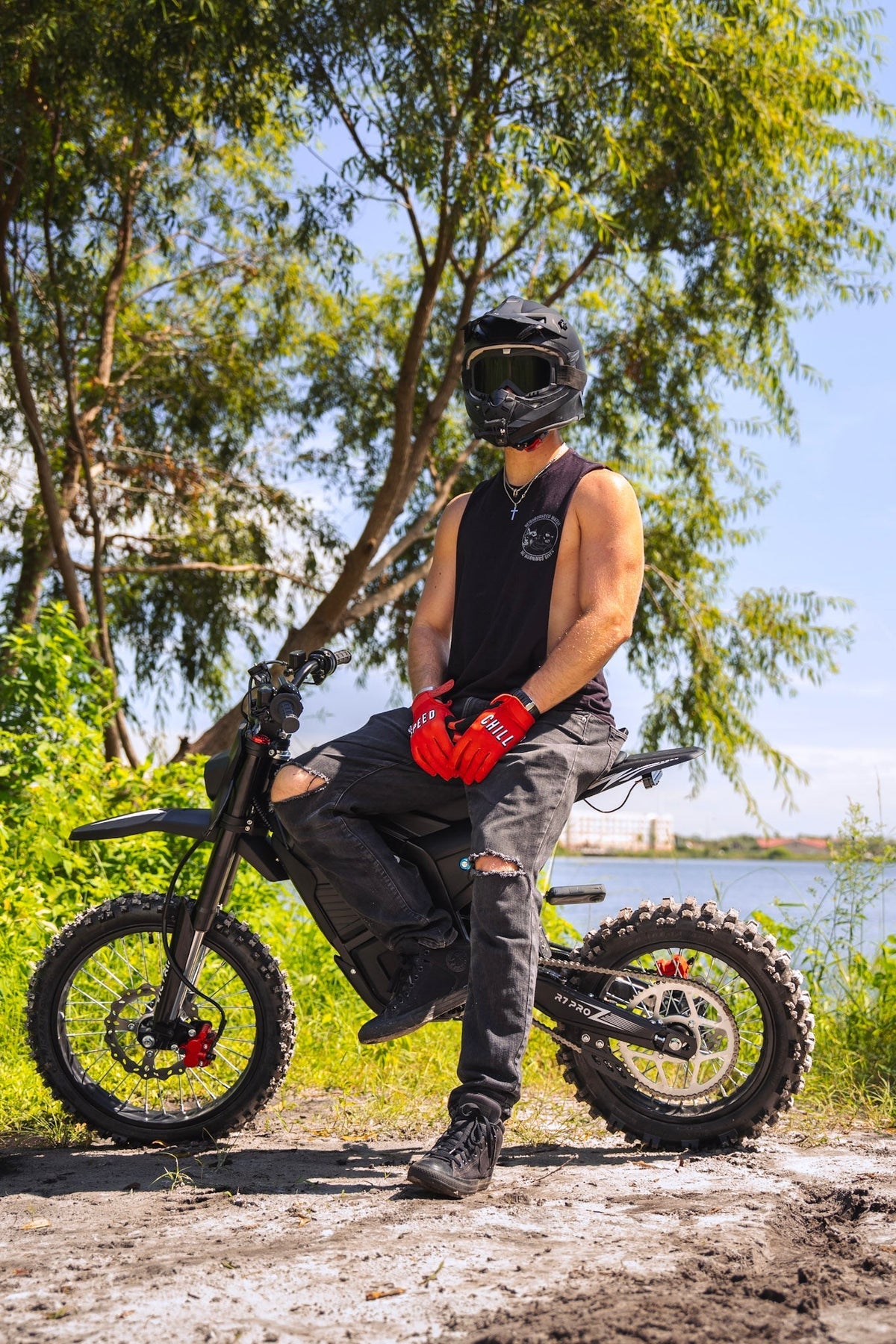
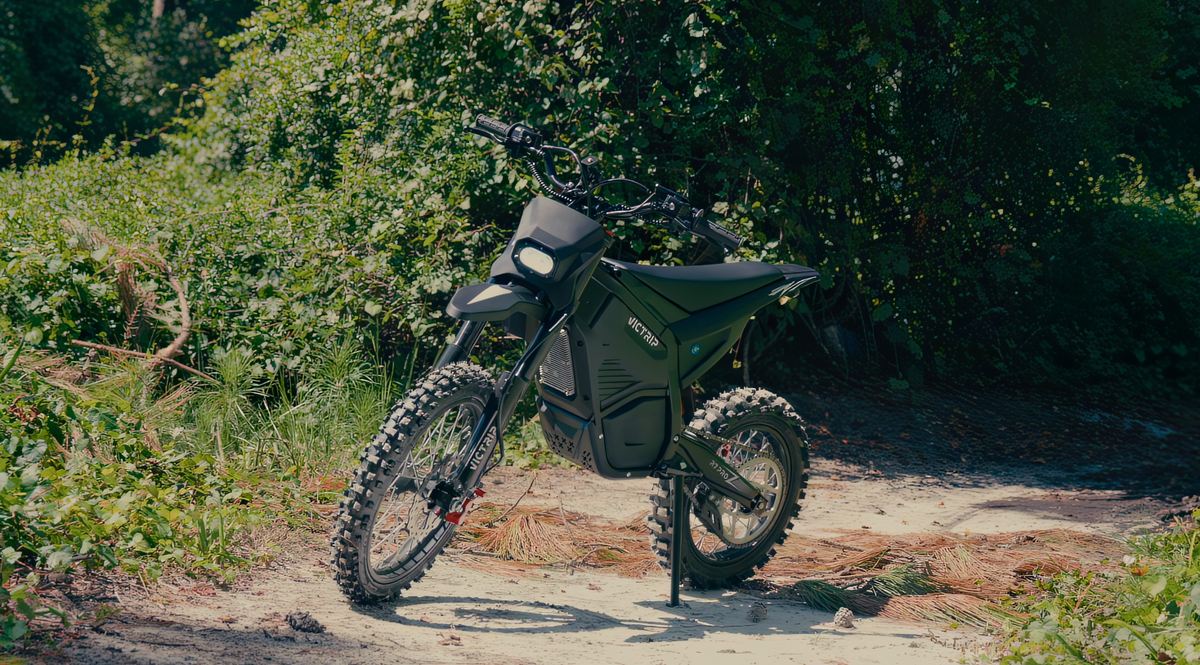
Unleashing Off-Road Excitement with the VICTRIP R7 Electric Dirt Bike