
Short version: torque matters more at low speeds — for launches, heavy loads, and steep hills — while wattage matters more for sustained power and top-end speed. In practice, you want a motor and system that balance both: high usable torque for climbs and a healthy continuous watt rating for prolonged climbs and higher speeds.
How torque and wattage work (technical primer)
Before we dive into shopping advice, let’s clear the physics without the fluff.
Torque: what Nm really measures
Torque is a rotational force. For eBikes it’s measured in Newton-meters (Nm) and tells you how much twisting force the motor can apply to the crank or wheel. Higher torque usually translates into stronger acceleration from a stop and better low-speed hill-climbing capability — it's the "get-going" force you feel when you mash the pedal or use throttle.
When comparing practical eBikes — from casual commuters to utility models like the Mimas Torque Sensor Step Through eBike — torque numbers reveal how confidently the bike will move from a stop, carry cargo, or climb local grades.
Wattage: peak vs continuous power
Wattage (W) is power — how much work the motor can do per unit time. Manufacturers sometimes list peak watts (short bursts) and continuous watts (what the motor can sustain for longer periods). Continuous wattage, together with battery capacity (Wh), determines how fast you can maintain speed uphill and for how long before the motor/controller/battery thermal limits kick in.
How torque and watts are mathematically related
There's a simple relationship: Power (W) = Torque (Nm) × Angular velocity (rad/s). In plain English: the same torque at higher rotational speed produces more power. So torque gives you force at low speeds; multiply that torque by rotational speed and you get power that sustains higher speeds. That’s why a motor with high Nm feels strong off the line but still needs sufficient wattage to sustain higher speeds.
Real-world effects: hills, acceleration, cargo, and speed
This is the section you’ll use to decide whether to obsess over torque numbers or wattage ratings when buying.
Hill climbing and low-speed torque
When you climb steep grades, your speed drops and angular velocity (wheel RPM) is low. Because Power = Torque × Angular Velocity, torque is the dominant factor at low RPM. That’s why riders report that high-Nm motors "pull harder" up hills even if two motors have similar watt ratings. If you live in a hilly area, prioritize torque (Nm) — aim for mid-drive motors with strong Nm ratings or hub drives with high starting torque.
Practical benchmarks (general guidance):
-
City commuting with mild hills: ~30–50 Nm is usually fine.
-
Regular steep climbs, cargo, or heavy riders: 60–90+ Nm is recommended.
-
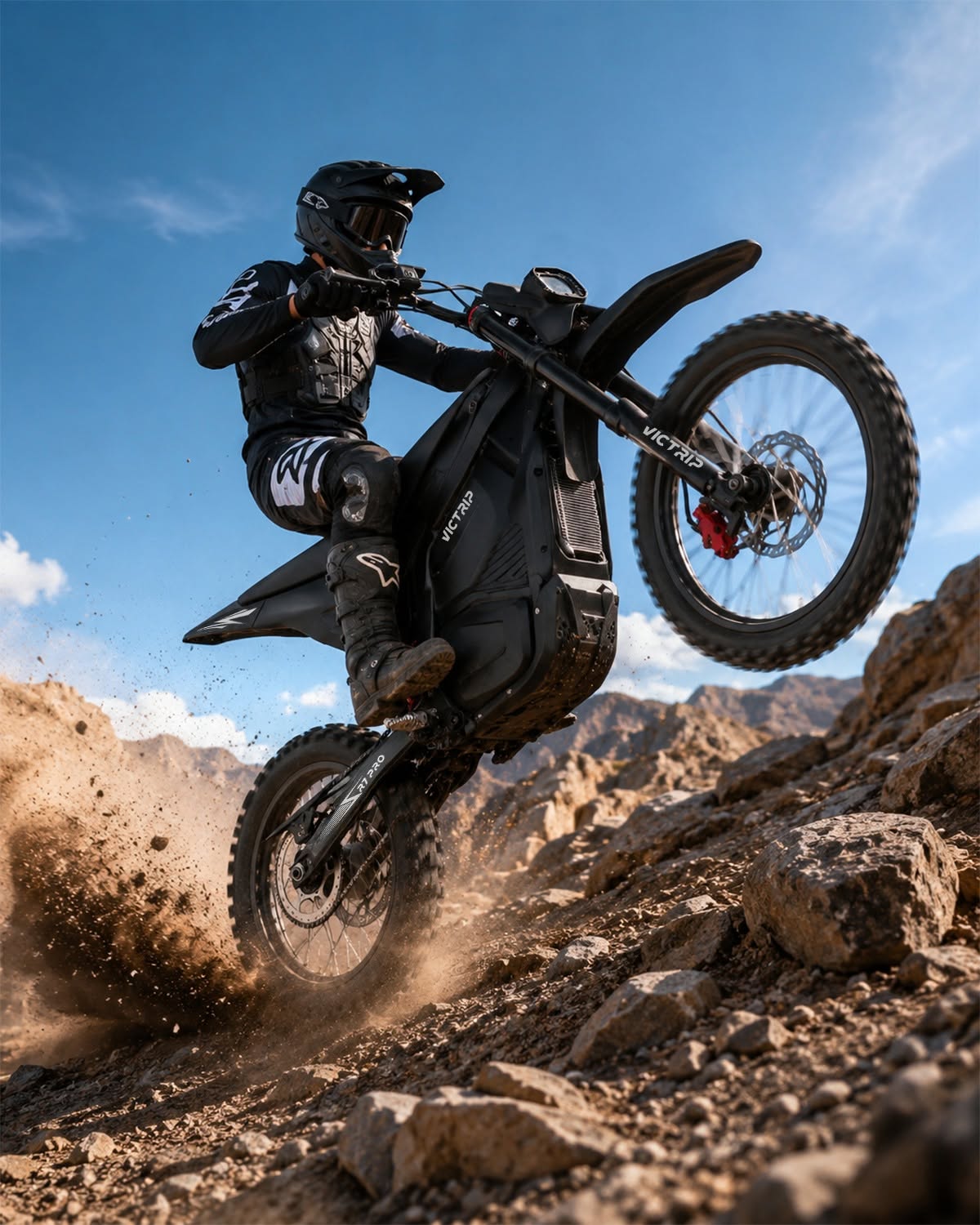
Aggressive off-road or heavy cargo touring: 90–120+ Nm gives a very confident feel.

Acceleration and launch feel
Torque is the immediate sensation when you accelerate from a stop. If you want a bike that zips away at lights or gets you onto a lane quickly, Nm matters. Wattage contributes too — more power means the motor can sustain higher torque as speeds rise — but the instantaneous push is torque’s domain.
Sustained speed and wattage
If you’re aiming for long, sustained climbs at higher speeds (or want to maintain a fast cruising speed on flats), continuous wattage is what keeps the bike going. Wattage correlates with ability to maintain speed against drag, gradients, and rolling resistance over time. A high-peak-watt motor that can’t sustain its output will still feel good for short bursts but may overheat or fade on long climbs.
Motor types, sensors, and drivetrain differences
Not all motors are equal even if Nm and W look similar on paper.
Mid-drive advantages for torque use
Mid-drive motors sit at the crank and leverage the bike’s gears. That lets the motor operate at a favorable RPM range where it produces torque efficiently — effectively multiplying torque through the geartrain. For hill climbing and heavy loads, mid-drive is often superior because you can use low gears to keep the motor in its sweet spot. Bosch and other premium systems are built around this idea.
Hub motors and raw wattage
Hub motors deliver torque directly at the wheel. They can be simpler and provide smooth throttle response, but they don’t benefit from gearing, so their low-speed torque depends entirely on motor design. High-watt hub motors can still perform well on hills if they're built with high starting torque, but they may be heavier and less efficient on long climbs compared with a mid-drive.
Sensors: torque sensors vs cadence sensors
Modern eBikes often use either torque sensors (measure how hard you’re pedaling) or cadence sensors (measure pedal rotation). Torque-sensor systems provide more natural, immediate assistance that scales with rider input — they make torque feel smoother and more usable. Cadence systems can feel on/off and may require more motor power to feel “natural.” If you care about precise, efficient assistance (and better use of Nm), prefer torque-sensor setups.
Read More: Cadence Vs Torque Sensor: Which Should You Choose for Your Next E-Bike?
Choosing the right motor for your needs
Here we translate numbers to recommendations.
Use-case buckets
-
Urban commuter (flat to gentle hills): Prioritize reliability, moderate torque (30–50 Nm), and efficient battery use. A 250–500 W motor with a torque sensor will feel responsive without being overkill.
-
Hilly commuter or heavy rider: Aim for 60–90 Nm and 500–750 W continuous power. A mid-drive with a wide gear range will make climbs manageable.
-
Cargo and touring: Pick high torque (80–120 Nm), large battery (Wh), and strong continuous wattage so you can carry heavy loads and climb long inclines without overheating.
-
Off-road / e-MTB: Look for peak torque and a strong torque curve (fast torque delivery), robust thermal management, and mid-drive configuration to use gears effectively.

Rider-weight and real-world tuning
Always adjust expectations based on rider + cargo weight. Motor specs are often tested with a 75–85 kg rider; heavier riders need more torque and wattage to achieve the same performance. Manufacturers sometimes publish charts or recommended max rider weights — use them as a guide.
Battery, controller, and voltage architecture matters
Don’t be fooled: motor Nm and W aren’t the whole story.
-
Voltage architecture: Higher-voltage systems (e.g., 48–72 V vs 36 V) can deliver the same power with lower current, improving thermal behavior and sustained output. That means a 750 W system at 48 V may feel stronger over time than a similar-rated low-voltage system.
-
Controller tuning: The controller limits current and can cap how much torque the motor gets. Two motors with the same nominal torque can feel different if their controllers are tuned differently.
-
Battery C-rate and capacity: Peak power draw, and how long it can be sustained without dropping voltage, depend on battery design. A big motor with a weak battery will underperform under load.
Legal & safety considerations
Many jurisdictions restrict eBike motor power or assistance speed. For example, some regions cap motor assistance to 250 W or limit assistance above 25 km/h for legal classification — this affects how manufacturers present wattage and why torque numbers are often emphasized in marketing instead. Always check local eBike class regulations before buying.
Buying checklist & specification cheat-sheet
When testing or comparing bikes, use this quick checklist:
-
Check the torque (Nm) and whether it’s peak or continuous.
-
Note continuous vs peak watts. Continuous wattage is what matters for long climbs.
-
Ask about voltage and battery discharge rating (C-rate). Higher voltage and higher discharge capability usually help sustained performance.
-
Test in low gear and with your typical load. See how it launches and maintains speed uphill. If possible, test with an assistant or cargo to judge real-world performance.
-
Review thermal protections and user reports. Motors/controllers that overheat will limit performance.
Conclusion — practical takeaway
So, which matters more? If your riding involves starts, steep short climbs, heavy loads, or carrying cargo, torque (Nm) is your priority. If you care about maintaining high speeds for long climbs or extended fast rides, continuous wattage (W) and the whole system (battery, controller, voltage) matter more.
Real-world buying advice: pick a reputable motor system (Bosch, Shimano, Brose, etc.) with clear continuous wattage and torque specs, prefer a torque-sensor mid-drive if you want natural assistance and hill-climbing efficiency, and test the bike loaded to match your use case. That’ll give you the best balance of acceleration, climbing ability, and sustainable performance.
FAQs
Is torque the same as horsepower or watts?
No. Torque (Nm) is rotational force; watts are power (work per second). They’re related by the equation Power = Torque × Angular Velocity, so they’re different ways of describing motor behavior. At low speeds, torque is the feeling; at higher speeds, watts dominate.
If two motors have the same watts but different Nm, which will climb better?
The motor with the higher usable torque (Nm), especially at low RPMs and with favorable gearing, will climb steeper grades more comfortably. Wattage alone doesn’t tell you how much low-speed rotational force you’ll get.
Do I need a mid-drive to get good torque?
Not necessarily. Hub motors can deliver strong starting torque if designed for it, but mid-drives get a big practical advantage from using the bike’s gears, making them more versatile for heavy loads and long climbs.
Will a higher-watt motor drain my battery faster?
Often yes — higher power draw reduces range if you use that power. But efficiency, battery capacity (Wh), and riding style matter. A well-matched higher-watt system with a larger battery can still give good range.
How much torque do I need for my hill?
It depends on gradient, speed, and total weight. As a rough guide: 30–50 Nm for rolling terrain; 60–90 Nm for regular steep hills or heavy riders; 90+ Nm for aggressive off-road or cargo use. Always test with your load.
Share:
Ebike Trailer Buying Guide: What to Look for Before You Buy
What Makes VICTRIP EBike Stand Out in 2025?