
Choosing the right trailer for your electric bike can transform how you travel, shop, and haul. This Ebike Trailer Buying Guide helps you cut through the noise so you'll know exactly what to look for before you buy. We'll cover capacity, hitch types, materials, safety, common use-cases, and the accessories that actually matter — in plain language and with practical examples you can use today.
Key Considerations When Choosing an Ebike Trailer
When you’re shopping, keep these high-level factors front of mind. They shape every decision from which trailer geometry you need to how much your ebike's motor and brakes will be stressed.
Payload Capacity vs. Usable Load
-
Rated capacity is often optimistic. Manufacturers may list maximum payload (e.g., 75 kg) — but real-world safe load should be lower. Aim to use at most ~75–85% of the rated capacity for repeated daily use.
-
Consider dynamic loads. A box of groceries may shift; bumps increase forces. Give yourself margin.
-
Distribution matters. Center heavy items low and close to the axle to maintain stability. If the trailer lists a center-of-gravity recommendation, follow it.
Frame Materials and Build Quality
-
Aluminum is light and corrosion-resistant. Great for riders who need portability.
-
Steel is tougher and often cheaper, but heavier and can rust if not treated.
-
Composite / reinforced plastics can be lightweight and weatherproof but may lack long-term repairability.
-
Welds, fasteners, and joints: Check for clean welds and robust hardware. Bolts should be grade-rated or stainless; plastic clips are fine for light loads but not heavy-duty use.
Wheel Size, Tire Type, and Suspension
-
Large wheels (20"–26") roll more easily over obstacles and reduce rolling resistance; they suit touring and rougher roads.
-
Small wheels (12"–16") let trailers fold compactly but may bounce more.
-
Tires: Larger volume tires absorb shock; puncture-resistant liners are smart for commuting.
-
Suspension helps when you carry fragile loads or kids. A simple leaf or coil system smooths bumps and cuts strain on the bike.
Build Geometry & Tongue Length
-
Longer tongue improves tracking and reduces sway but increases turning radius — watch for clearance at tight turns.
-
Short tongues make tighter turns easier but can amplify pitching or jackknifing under sudden stops.
Brakes & Control
-
Most trailers rely on the bike’s brakes, but heavy-load trailers with surge or mechanical brakes increase safety.
-
Electric-assist trailers may have their own regenerative or friction braking systems — these are useful for downhill control.
Types of Ebike Trailers and Which Fits You
There’s no one-size-fits-all trailer. Pick the type that matches your main use-case.
Cargo Trailers
-
Box-style cargo trailers are enclosed options ideal for groceries and weather-sensitive items.
-
Flatbed trailers work for bulky gear like boxes, plants, or small furniture.
-
Features to look for: Tie-down points, removable sides, weatherproof covers, and a low loading deck.

Child Trailers
-
Built with seats, harnesses, and roll cages.
-
Look for models with 5-point harnesses, safety-certified frames, and impact-absorbing padding.
-
Many double-kid trailers also allow conversion to cargo mode.
Pet Trailers
-
Wider frames, ventilation, and easy entry.
-
Check for secure attachment points to prevent the pet from standing up or pushing the trailer.

Single-wheel vs. Two-wheel Trailers
-
Single-wheel trailers mimic trailerbikes and feel more like riding a long bike; they’re better for maneuverability and speed but can demand more balance.
-
Two-wheel trailers are stable at rest and when stopped; they’re better for heavier cargo and families.
Electric-Assist Trailers
-
These include their own small motor or powered wheels to move heavy loads with less strain on the ebike.
-
Great for hills and heavy commuters, but more expensive and require battery management.
Folding & Compact Designs
-
If you carry a trailer on transit or store it in a small apartment, folding designs are a must.
-
Check fold/unfold time and whether tools are required.
Buying, Setup & Maintenance — How to Keep Your Trailer Working
Purchasing a trailer is only the start. Proper setup and routine care keep the trailer safe, long-lived, and hassle-free.
Attachment Systems & Hitch Types
-
Seatpost adapters clamp to the seatpost and are quick to fit, but they can transmit torque and stress to your bike's seatpost — not ideal for heavy loads.
-
Rear axle hitches bolt into the axle or skewer and provide secure, stable attachment; preferred for cargo and kids.
-
Frame-mounted hitches attach to dedicated brackets on the frame or rack, offering a robust and durable connection.
-
Quick release vs. bolt-on: QR systems are convenient; bolt-on hitches are stronger for heavy use.
Initial Setup Checklist
-
Read the manual — no, seriously. Manufacturers include critical torque and clearance specs.
-
Install hitch and check clearances — ensure the trailer doesn’t contact the rear wheel or drivetrain throughout a full range of motion.
-
Test with low load — do a slow trial run in a parking lot to check sway, turning radius, and braking.
-
Confirm lights and reflectors — install if not included.
Routine Maintenance
-
Check fasteners weekly during heavy use.
-
Inspect tires for wear and proper inflation.
-
Lubricate pivot points and check for metal fatigue at welds.
-
Store dry and covered to prevent corrosion.
-
Replace worn hitch parts proactively — don’t wait for failure.
Troubleshooting Common Issues
-
Sway at speed: Load too high/forward or tongue too short. Re-balance load and test again.
-
Pulling to one side: Check wheel alignment and hitch centering.
-
Excessive bounce: Lower tire pressure slightly or install suspension if available.
Safety, Regulations & Best Practices
Trailers change handling and braking dynamics. Respect speed, load, and local laws.
-
Legal considerations: Some jurisdictions treat heavy trailers like vehicle trailers. Check local regulations for lights, reflectors, and maximum combined weight.
-
Lighting & visibility: Use a tall safety flag, rear lights, and side reflectors for night or low-visibility riding.
-
Helmet & protective gear: Required for riders and recommended for child passengers even when inside an enclosure.
-
Speed management: Reduce speed when loaded, especially downhill. Your stopping distance increases significantly.
-
Practice: Ride empty and with light loads in safe areas to get used to turning, backing (if needed), and braking.
Accessories, Add-ons and Useful Extras
-
Weather covers: Waterproof, breathable covers protect kids and cargo.
-
Tie-down straps / cargo nets: Keep loads secure.
-
Cargo dividers: Stop items from shifting.
-
Flag poles & LED light bars: Improve visibility.
-
Puncture-resistant liners and spare tube kit: Saves trips and delays.
-
Load platform extenders: For excessive width needs — confirm legal limits.
Budgeting: Costs, Value, and Long-term Ownership
-
Price brackets:
-
Entry-level: $100–$300 — basic single-purpose trailers.
-
Mid-range: $300–$800 — higher build quality, more features, better hitch systems.
-
Premium: $800+ — suspension, child-certified, folding engineering, or electric-assist.
-
-
Total cost of ownership: factor in replacement tires, lighting, hitch upgrades, and periodic maintenance.
-
Warranty & service: Choose brands with parts availability and customer support.
TOP PICK
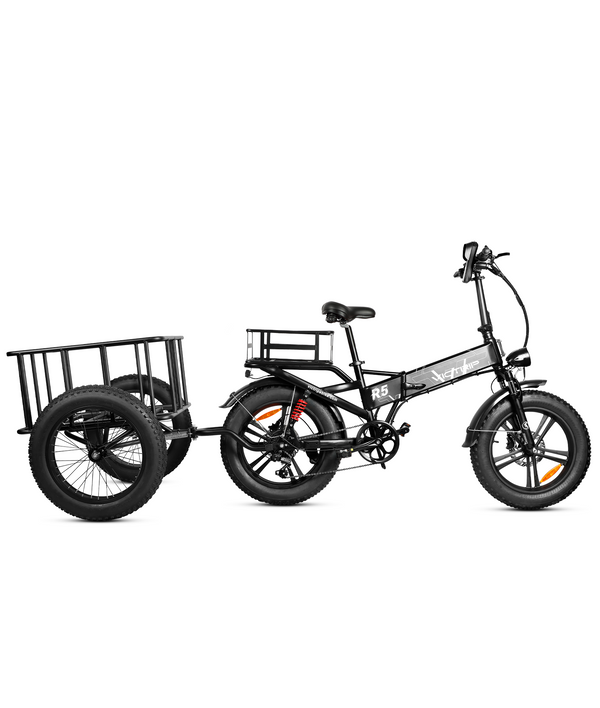
VVICTRIP® Electric Bike Trailer
$499.00
Use-cases and Scenario Planning
-
Daily commuter: prioritize folding, quick-attach, and weather protection.
-
Family outings: child trailers with certified seats and harnesses.
-
Weekend hauling / yard work: flatbed trailers with high payload and tie-downs.
-
Touring: large wheels, durable frame, and modular storage.
Conclusion — Quick Buying Checklist
-
Choose the right type (cargo, kids, pet, electric-assist).
-
Match rated capacity with a healthy safety margin.
-
Prefer axle- or frame-mounted hitches for heavy loads, avoid seatpost hitches on carbon frames.
-
Check wheel size and suspension for your typical terrain.
-
Inspect build quality, welds, and hardware before purchase.
-
Invest in lights, flags, and reflectors — visibility saves lives.
-
Practice safe riding and maintenance routines.
If you'd like, I can produce a printable one-page checklist or a buyer comparison table that you can paste into a product page or download for use on mobile.
FAQs
Can I tow a trailer with any ebike?
Not always. Check your ebike's motor and frame rating; lighter-class motors and delicate frames may struggle with heavy trailers. Use a trailer that matches your bike's capacity and consider a mid-drive motor or electric-assist trailer for hills.
Is it safe to carry a child in a trailer on city streets?
Yes, many parents do, but choose a trailer with a certified harness, roll cage, and proper suspension. Use lights, ride defensively, and avoid high-speed roads. Verify local laws and recommended age/weight limits.
Do I need a special hitch for carbon frames?
Carbon seatposts are sensitive to loads. Avoid seatpost hitches on carbon frames; prefer axle or frame-mounted hitches, and always check manufacturer's guidance.
How do I fold and store a trailer in a small apartment?
A: Look for folding models with quick-release wheels and compact folding geometry. Remove wheels if needed and store vertically to save floor space.
How to choose between single-wheel and two-wheel trailers?
For speed and agility (and lighter cargo), choose single-wheel. For heavy loads, kids, or stability at rest, choose two-wheel.
Share:
How Fast Can an Electric Moped Bike Go?
Torque vs Wattage: What Matters More on an eBike?