
If you’re searching for Heavy Duty Electric Bikes for Big Riders, you want a bike that won’t just get you from A to B — you want one that’s safe, dependable, and comfortable under real-world loads. This guide breaks down the technical must-haves (frame, motor torque, battery, wheels, and brakes), shows how to test and maintain a high-payload e-bike, and reviews the VICTRIP Mimas Step-Through eBike alongside seven other powerful picks. Read on and you’ll know exactly what to look for.
Why weight capacity on an e-bike matters
Weight capacity on an e-bike isn’t a marketing number — it’s a safety and performance figure. Going above the rated payload affects braking distance, handling stability, frame life, wheel stress, and motor strain. Good manufacturers test for payload and publish a realistic limit; top-rated heavy-duty e-bikes often advertise payloads of 400 lb (181 kg) or more. For example, cargo and heavy-rider models in recent reviews advertise capacities in the 400–560 lb range.

Frame, fork, and build: the skeleton
A heavy-duty bike starts with a reinforced frame. Look for:
-
6061 or 7005 aluminum with gussets at stress points or steel frames for extreme durability.
-
Thick-walled tubing and reinforced welds at the head tube, bottom bracket, and rear dropouts.
-
Integrated rear rack mounts or rated racks from the factory.
Don’t accept vague claims. If a seller can’t give you frame material and engineering details, that’s a red flag. Manufacturers oriented toward heavy riders will advertise reinforced frames and show payload tests or rider testimonials.
Motor power and torque: hill-climbing for heavy riders
Motor wattage (e.g., 750 W, 1000 W) is only part of the story — torque (measured in Nm) determines how well the bike moves heavy loads uphill. Torque-sensing mid-drive systems or powerful hub motors with high continuous torque are ideal. For instance, high-payload models often use motors rated for high torque. If you live in a hilly area, prioritize torque over peak wattage.
Quick rule: For consistent hill-climbing with heavy loads, aim for at least 80–100 Nm torque or a mid-drive solution paired with an appropriate gear range.
Battery, range, and real-world expectations
Battery capacity is typically expressed in volt-amp-hours (V & Ah) or watt-hours (Wh). Real-world range depends heavily on payload, riding speed, terrain, and assist level. A larger battery (e.g., 48 V, 20–30 Ah) will give longer real-world range when carrying heavier riders and cargo. Some models advertise long ranges (one model claims up to 130 miles under ideal conditions), but expect significantly less under heavy payload and hilly terrain. The VICTRIP Mimas, for example, lists a large battery spec that translates to extended range under moderate conditions.
Wheels, spokes, and rims: build them strong
Wheels are often the failure point when riders overload a bike. Heavy-duty builds use:
-
More spokes (36 or 48 vs. the usual 28), often stainless steel, higher tension.
-
Double-wall rims rated for cargo or moped-style loads.
-
Reinforced hubs and thicker stainless spokes to resist fatigue.
When comparing bikes, ask the seller: how many spokes, what rim width, and is the wheel built (hand-tensioned) for heavy payload? If they say “standard wheels” and you’re over 200 lb, look elsewhere.
Brakes and stopping power
Stopping a heavier rider requires serious hardware:
-
Hydraulic disc brakes are effectively mandatory for heavy loads.
-
Larger rotors (180–203 mm) help dissipate heat and maintain consistent stopping.
-
Consider brake pad compound and upgradeability — heavier riders burn through pads quicker.
Good manufacturers balance brake size with motor regen and gearing to avoid overheating on long descents. Don’t underestimate braking when you increase payload.
Comfort & ergonomics for bigger riders
Comfort matters — a heavy rider under duress will suffer joint pain and discomfort. Look for:
-
Wide saddles with supportive foam and a cutout.
-
Dropper or reinforced seatposts and properly rated clamp diameters.
-
Upright geometry for easier weight distribution and visibility.
-
Suspension (front or full) sized to handle higher loads, or at least a heavy-duty suspension fork.
Ergonomics also affect control: wider handlebars and a longer stem can help with leverage and leverage-based steering control.
Tires and traction: fat tires vs reinforced road tires
Tires for heavy riders should have both volume and load rating:
-
Fat tires (3.0"+) provide cushioning and stability, but weigh more and increase rolling resistance.
-
Reinforced road or hybrid tires with high load ratings and puncture protection can be better for commuting.
-
Tire pressure matters: heavier riders will need higher pressure within the tire’s rated range.
Choose tires rated for your weight plus cargo and check the manufacturer’s recommended pressure range.
Payload distribution: racks, cargo, and passengers
Payload is not just rider weight — add cargo, panniers, and possible passengers. For cargo setups:
-
Use factory-rated racks or aftermarket racks rated to match or exceed bike payload.
-
Consider a cargo trailer for large loads — it shifts stress off the bike’s rear wheel.
-
Confirm the dropouts and axle type (thru-axle vs bolt) — thru-axles generally offer more rigidity.
Some e-bikes come with integrated cargo options; others require retrofits. Don’t improvise; match components to the total expected load.

Maintenance checklist for high-payload use
Routine maintenance keeps a heavy-use bike reliable:
-
Check spoke tension monthly for initial 500–1,000 miles.
-
Inspect brake pads every 200–400 miles under heavy use.
-
Watch for frame cracks at welds and dropouts.
-
Keep the drivetrain clean and ensure chain stretch is monitored more often due to added torque.
A proactive maintenance regimen extends life and keeps warranties valid.
Top buying tips and red flags
Do this before buying:
-
Ask for the true payload rating and whether it includes rider + cargo.
-
Request wheel build specs (spoke count, rim type).
-
Test-ride with weight if possible (bring a 20–30 lb load or ask the dealer to simulate).
-
Check warranty for frame and motor — heavier use can expose defects faster.
-
Avoid vague language like “suitable for all riders” — ask for concrete numbers.
Red flags: thin-rim wheels, single 28-spoke wheels on heavy-rider models, and small rotors with hub motors that lack torque specs.
VICTRIP Mimas Torque Sensor Step-Thru eBike
The VICTRIP Mimas Step Through Ebike position themselves as powerful, value-oriented step-through e-bikes. Their publicly listed specs include a high-capacity battery (48 V, large Ah rating), a robust motor with high peak wattage, and a torque-sensing assist system that responds smoothly to pedal input — features that benefit heavier riders by delivering tailored power and conserving battery when possible. The product page lists a 1000 W peak motor, a large 48 V 30 Ah battery, and a torque sensor; the manufacturer claims long-range potential under ideal conditions.
Pros
-
Torque sensor for smooth, proportional assist (better control under load).
-
Large battery options for extended range under moderate loads.
-
Step-through frame for easier mounting, helpful for riders with mobility concerns.
Cons / Caveats
-
Quoted top-range figures (e.g., “up to 130 miles”) reflect ideal conditions; expect less with heavier riders and mixed terrain.
-
Confirm wheel build and spoke counts for heavy-payload use before purchase.
-
After-sales support and local service options vary by seller; check delivery and service policies.
Who should consider the Mimas? Riders who want a torque-sensing step-through with a large battery and a value price point, provided they confirm wheel/build specs and the seller’s warranty terms. If you rely on very steep hills with maximum loads, compare torque numbers and test rides against mid-drive cargo-focused alternatives.
Why the Mimas could be a good pick for heavier riders
The torque sensor and larger battery make the Mimas attractive to riders who want responsive assistance and longer range. Torque sensing helps preserve battery by matching assist to your pedaling force — this is useful for heavier riders because it provides intuitive support and reduces sudden surges that stress the drivetrain. However, always verify the actual payload rating, wheel build, and service options prior to buying.
TOP PICK
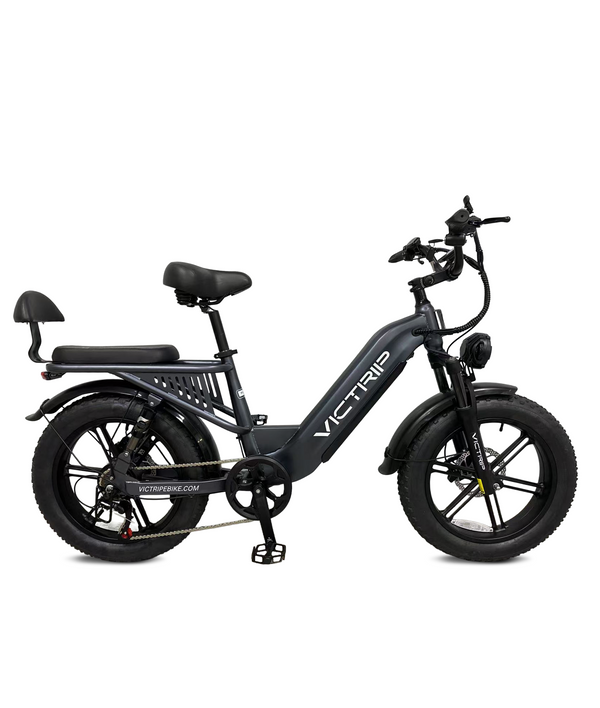
VICTRIP® Mimas Electric Bicycles With Torque Sensors
$1,299.00
How to test-ride safely if you're a heavier rider
-
Bring weight: simulate cargo by carrying a pack or bringing a weighted bag to the demo.
-
Test hills: verify motor torque at various assist levels.
-
Brake test: do repeated stops to test fade and rotor heat.
-
Inspect wheels: check spoke tension and lateral/trueness before buying.
-
Ask for service plan: ensure access to a local shop or mail-in warranty.
A careful demo is the best way to confirm whether a bike will be safe and comfortable at your expected load.
Buying vs building: when to customize components
If a stock bike is close but not perfect, upgrading certain components can turn it into a true heavy-duty rig:
-
Rebuild wheels with 36–48 stainless spokes on double-wall rims.
-
Upgrade to larger brake rotors and higher-performance pads.
-
Fit a heavy-duty seatpost and saddle with an increased clamp rating.
-
Add a rated rear rack or plan for a trailer for big loads.
Remember: component upgrades should match the intended use and total payload; cheap wheel upgrades on a weak frame will only delay eventual failure.
Conclusion — smart choices for confident riding
Finding the right Heavy Duty Electric Bike for Big Riders is about matching realistic expectations to solid engineering: reinforced frames, torque-capable motors, beefy wheels, and reliable brakes. The VICTRIP Mimas Step-Through is an interesting, value-oriented option with torque sensing and a large battery — but confirm wheel builds, payload ratings, and local support before committing. Test-ride under load, prioritize safety, and invest in maintenance to keep your e-bike dependable for years of riding.
FAQs
Q1: What is a safe weight limit for heavy riders on e-bikes?
A1: Safe weight limits vary by model. Many heavy-duty e-bikes are rated 400 lb (181 kg) or more; some cargo-focused models list capacities above 500 lb. Always confirm the manufacturer’s figure and whether it includes both rider and cargo.
Q2: Does higher motor wattage always mean better hill climbing?
A2: Not necessarily. Wattage matters, but torque and gearing determine hill-climbing efficiency. A mid-drive with good torque and gearing may outperform a higher-watt hub motor on climbs.
Q3: How much range will I actually get if I weigh 250+ lb?
A3: Range is reduced under heavy loads. Big batteries help — e.g., 48 V 20–30 Ah packs give much longer range — but expect 30–60% less range than manufacturer “ideal” claims when carrying heavy loads in hilly terrain.
Q4: Are step-through frames weaker than step-over frames?
A4: Not inherently. Modern step-through frames can be reinforced and built for heavy duty; check for gussets and reinforced tubing. The Mimas step-through, for instance, targets ease-of-access while offering robust specs — but verify wheel and rack ratings.
Q5: Should I choose fat tires or reinforced narrow tires?
A5: Fat tires add comfort and traction but increase rolling resistance. For mixed commuting and cargo, a reinforced hybrid tire may be better; for off-road or sandy routes, fat tires win. Match tires to your typical ride surface.
Share:
How to Pick the Best Cargo Electric Tricycle?
Fat Tire Electric Bike Buyer Questions Answered