

European trails offer some of the most breathtaking riding experiences in the world. From the rugged mountain paths of the Alps to scenic forest routes in Germany and winding countryside tracks in France, every trail presents unique challenges. That's why understanding how to choose an off-road e-bike for European trails is essential for riders who want both performance and reliability.

An off-road e-bike can transform your outdoor adventures by helping you conquer steep climbs, travel longer distances, and enjoy challenging terrain without excessive fatigue. However, not every electric bike is built for demanding European landscapes.
This guide will help you understand the key features to evaluate before purchasing an off-road e-bike and explain why the VICTRIP R6 Pro is an outstanding option for trail enthusiasts.
Understanding European Trail Conditions
Before selecting an off-road e-bike, it's important to understand the diversity of European terrain.
Mountain Trails
Mountain regions often feature:
- Steep inclines
- Rocky surfaces
- Technical descents
- Rapid weather changes
These environments demand strong motors, durable frames, and advanced suspension systems.
Forest Routes
Forest trails commonly include:
- Muddy sections
- Tree roots
- Loose gravel
- Narrow paths
Riders need excellent traction and responsive handling.
Coastal and Rural Paths
Coastal routes and countryside trails may involve:
- Sand
- Wet grass
- Mixed terrain
- Long-distance riding
A larger battery and comfortable geometry become especially important.
Why Choosing the Right Off-Road E-Bike Matters
A quality off-road e-bike provides:
- Better safety
- Greater efficiency
- Improved comfort
- Enhanced durability
- More enjoyable adventures
Making the wrong choice can result in limited range, poor climbing performance, or excessive maintenance costs.
When learning how to choose an off-road e-bike for European trails, always prioritize performance features that match your intended riding environment.
Tip 1: Focus on Motor Power
The motor is the heart of any off-road e-bike.
Motor power directly influences:
- Climbing ability
- Acceleration
- Terrain adaptability
- Overall riding experience
For European trails, a powerful motor helps maintain speed on steep gradients and rough surfaces.
Hub Motors vs Mid-Drive Motors
| Feature | Hub Motor | Mid-Drive Motor |
|---|---|---|
| Cost | Lower | Higher |
| Maintenance | Simple | Moderate |
| Hill Climbing | Good | Excellent |
| Efficiency | Good | Excellent |
| Trail Performance | Strong | Superior |
For recreational and adventure riders, both systems can perform well, provided they deliver sufficient torque.
Tip 2: Evaluate Battery Capacity
Battery performance determines how far you can ride before needing a recharge.
Battery capacity is usually measured in watt-hours (Wh).
Common ranges include:
| Battery Capacity | Typical Range |
|---|---|
| 500Wh | 25–45 miles |
| 750Wh | 40–65 miles |
| 1000Wh+ | 60–100+ miles |
Range Expectations
Actual range depends on:
- Rider weight
- Terrain
- Weather conditions
- Riding mode
- Tire pressure
European trail riders often spend several hours exploring remote areas, making a high-capacity battery a valuable investment.
The VICTRIP R6 Pro features a large-capacity battery designed to support extended adventures and demanding terrain.
Tip 3: Check Suspension Quality
Suspension dramatically impacts comfort and control.
Without proper suspension, rough terrain can become exhausting and unsafe.
Front Suspension
Front suspension forks absorb impacts from:
- Rocks
- Roots
- Potholes
- Uneven surfaces
This setup works well for many trail riders.
Full Suspension
Full-suspension systems add rear shock absorption.
Benefits include:
- Greater comfort
- Better traction
- Improved stability
- Enhanced downhill performance
While more expensive, full suspension can significantly improve riding quality on demanding European trails.
Tip 4: Consider Tire Performance
Tires are your direct connection to the trail.
A quality off-road e-bike should feature tires capable of handling multiple surfaces.
Look for:
- Deep tread patterns
- Puncture resistance
- Wide profiles
- Strong sidewalls
Fat tires are particularly beneficial because they provide:
- Enhanced grip
- Better shock absorption
- Increased stability
These advantages are valuable when riding through mud, gravel, snow, or sand.
Tip 5: Examine Frame Design
Frame design affects both comfort and durability.
Popular frame materials include:
Aluminum
Advantages:
- Lightweight
- Corrosion resistant
- Affordable
Carbon Fiber
Advantages:
- Extremely light
- Excellent vibration absorption
Disadvantages:
- Higher cost
Steel
Advantages:
- Strong
- Comfortable ride quality
Disadvantages:
- Heavier
Most trail riders find aluminum frames provide the best balance between durability and value.
Tip 6: Look for Reliable Braking Systems
Brakes are critical when descending steep European trails.
Hydraulic disc brakes are generally considered the best option.
Benefits include:
- Strong stopping power
- Consistent performance
- Better modulation
- Improved safety in wet conditions
Mechanical brakes can work adequately but typically require more frequent adjustments.
For off-road adventures, dependable hydraulic brakes offer greater confidence and control.

Tip 7: Assess Comfort Features
Comfort becomes increasingly important during long rides.
Important features include:
- Ergonomic saddle
- Adjustable handlebars
- Comfortable grips
- Balanced riding position
Even a powerful off-road e-bike can become difficult to enjoy if it lacks rider-focused comfort features.
Small details often make a significant difference over hours of trail riding.
Tip 8: Understand European Regulations
When researching how to choose an off-road e-bike for European trails, understanding local regulations is essential.
Different countries may have varying requirements regarding:
- Maximum assisted speed
- Motor output
- Helmet usage
- Trail access
Before riding, always review local guidelines and trail regulations.
For general information about European cycling standards, riders can visit the official website of the European Cyclists' Federation.
Staying informed helps ensure safe and legal riding experiences.
Tip 9: Choose a Trusted Off-Road E-Bike
Not all electric bikes are built for serious trail use.
Look for a model that combines:
- Strong motor performance
- Long-range battery
- Durable construction
- Reliable braking
- Comfortable design
Why the VICTRIP R6 Pro Stands Out
Among today's trail-ready options, the VICTRIP R6 Pro offers an impressive balance of power, capability, and value.
Key highlights include:
- Powerful motor for climbing challenging terrain
- High-capacity battery for extended adventures
- Fat tires for superior traction
- Durable frame construction
- Comfortable riding position
- Excellent off-road capability
For riders exploring mountain routes, forest paths, and countryside trails, the VICTRIP R6 Pro delivers the features needed for confident performance.
TOP PICK
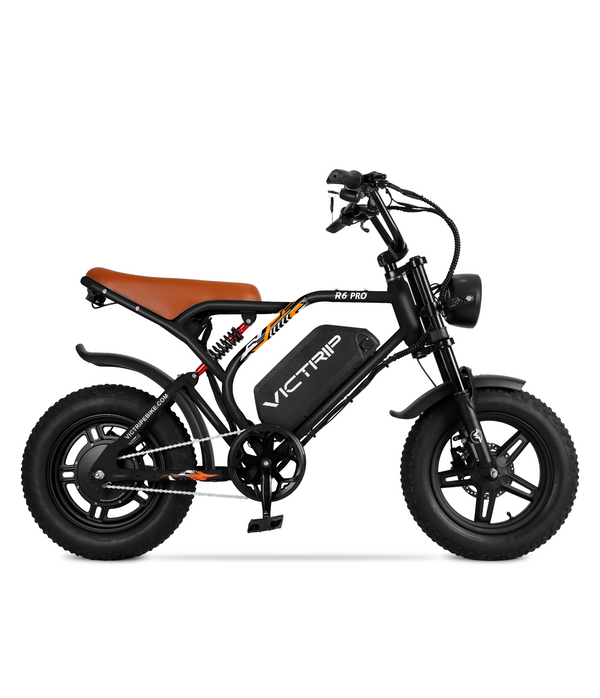
VICTRIP®R6 Pro Fat Tyre Electric Moped Bike
€1,099.00
Comparison Table
| Feature | Basic E-Bike | Premium Trail E-Bike | VICTRIP R6 Pro |
|---|---|---|---|
| Motor Power | Moderate | High | High |
| Battery Capacity | Average | Large | Large |
| Tire Width | Standard | Wide | Fat Tires |
| Suspension | Basic | Advanced | Advanced |
| Trail Capability | Moderate | Excellent | Excellent |
| Long-Distance Comfort | Moderate | High | High |
Maintenance Tips
Regular maintenance helps maximize performance and lifespan.
Weekly Checks
- Inspect tire pressure
- Clean the frame
- Examine brake function
Monthly Checks
- Inspect suspension components
- Tighten bolts
- Lubricate moving parts
Seasonal Maintenance
- Battery health inspection
- Deep cleaning
- Professional safety check
Proper care ensures your off-road e-bike remains ready for every adventure.
Frequently Asked Questions
1. What is the best motor power for European trails?
A powerful motor with strong torque is ideal for climbing steep hills and handling rough terrain efficiently.
2. Are fat tires necessary for off-road riding?
Fat tires aren't mandatory, but they significantly improve grip, comfort, and stability on challenging surfaces.
3. How far can an off-road e-bike travel on one charge?
Range varies based on battery size and terrain, but many quality models can travel between 40 and 100 miles.
4. Is suspension important for trail riding?
Yes. Suspension improves comfort, control, and safety when riding on rough trails.
5. Why is battery capacity important?
A larger battery allows longer rides and reduces range anxiety during remote trail adventures.
6. Is the VICTRIP R6 Pro suitable for beginners?
Yes. The VICTRIP R6 Pro offers user-friendly performance, stable handling, and strong off-road capability suitable for both beginners and experienced riders.
7. Can off-road e-bikes be used on regular roads?
Yes. Most off-road e-bikes can be ridden on paved roads while still providing excellent trail performance.
8. How often should I maintain my off-road e-bike?
Basic inspections should be performed weekly, with more detailed maintenance conducted monthly and seasonally.
Conclusion
Learning how to choose an off-road e-bike for European trails requires careful consideration of motor performance, battery capacity, suspension quality, braking systems, comfort, and durability. European trails offer incredible opportunities for exploration, but they also demand equipment capable of handling varied and challenging conditions.
By focusing on these nine essential factors, riders can confidently select an off-road e-bike that matches their goals and riding style. For those seeking a powerful, versatile, and adventure-ready option, the VICTRIP R6 stands out as an excellent choice, delivering the performance and reliability needed to tackle Europe's most exciting trails.
Share:
Buying Your First Off-Road Electric Moped in Europe: A Complete Guide
Why Electric Mountain Bikes Are Growing in Italy