


The first electric dirt bike I ever threw a leg over belonged to a friend who’d bought it on a Black Friday sale three years earlier. He got it for a song. He also got it with brake lines that felt like cooked spaghetti, a rear shock that bottomed out on a two-foot drop, and a battery that went from “full” to “walking” in about forty minutes of actual trail riding. He sold it the following spring at a loss and bought something with half the claimed power and twice the real-world usability.
That story is the whole reason this guide exists. Black Friday is a genuinely good time to buy an electric dirt bike. The deals are real, the inventory is moving, and the category has never been more competitive. But the discount is the least important number on the page. What matters is whether the bike fits you — your height, your terrain, your tolerance for wrenching, and the laws in the state where you plan to ride.
Let’s sort it out.
The Black Friday Trap Nobody Warns Beginners About
Here’s the uncomfortable truth about this season: the bikes with the deepest markdowns are often the ones that were overpriced or underspecced to begin with. A 40% cut on a machine that was never right for you is still a 60% waste of money.
The 2026 Black Friday window is already showing familiar patterns. Valtinsu’s Fall Ride Event was running up to $590 off six weeks before Black Friday proper on November 27, and previews from Qronge and VICTRIP show cuts clustering in the 15% to 40% range, with the bigger numbers landing on last season’s stock. That’s not a reason to avoid the sale. It’s a reason to walk in with a shortlist and a baseline price, not a credit card and a prayer.
The smarter play: decide what you need before the discounts start flying. A $200 cut on the right bike beats a $600 cut on the wrong one every single time.
First, Answer Three Questions Before You Look at a Single Spec Sheet
Peak power is the number manufacturers want you to stare at. It’s also close to useless for a beginner. The bike you should buy is decided by three far less glamorous factors.
1. How tall are you, really?
Seat height and standover clearance matter more than motor wattage when you’re learning. A bike you can’t flat-foot at a stop is a bike you’ll tip over in the first ten minutes of trail riding. The Talaria X3 MX, for example, is widely recommended as the most forgiving full-size beginner machine at $3,295, with a 31.9-inch seat and a 121-pound curb weight. If you’re under about 5’8”, that’s a far more sensible starting point than a taller, heavier Sur-Ron.
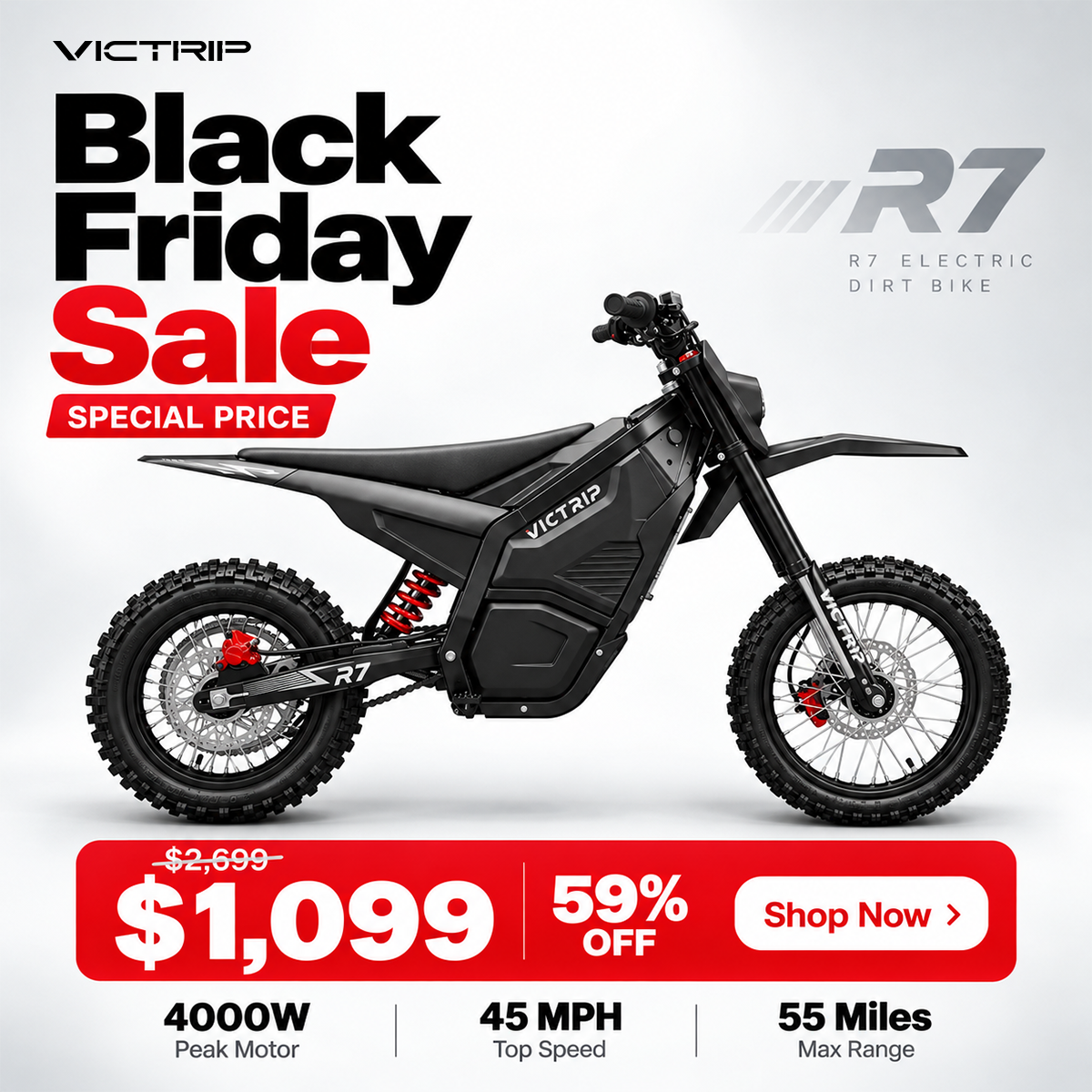
At the budget end, compact machines like the VICTRIP R7 are explicitly sized for riders from roughly 4.2 to 5.9 feet, with a 28.3-inch standover height and a 128-pound curb weight. For a shorter adult or a shared family bike, that’s not a compromise — it’s the correct fit.
2. What does “trail” actually look like where you live?
A fire-road cruiser and a tight single-track bike are different animals. If your local riding is wide gravel roads with long climbs, you want torque and thermal headroom. If it’s technical, rocky singletrack, you want light weight and a low center of gravity. A 195-pound Sur-Ron Ultra Bee with a 35.8-inch seat is a brilliant open-terrain machine and a miserable first bike on tight, rooty trails.
3. Can you leave the power mode alone?
Every beginner says yes. Almost no beginner actually does. This is why rider aids matter more than peak kilowatts. The Talaria Sting R MX4 ships with a 20 mph city mode — a genuine safety feature for a new rider, not a gimmick. The Sur-Ron Light Bee 2 goes further with traction control, wheelie control, and adjustable regeneration, which are the electronic equivalent of training wheels that don’t look like training wheels.
The Real Spec Sheet: What Actually Matters on Dirt
Ignore the headline power figure for a minute. These are the specs that separate a bike you’ll keep from a bike you’ll resell in frustration.
Battery: Chemistry and Swapability Beat Claimed Range
Advertised range is measured at a steady 15 mph on flat ground with a 150-pound rider. Real trail range is not. The Sur-Ron Light Bee X is rated for 40 to 60 miles, but realistic trail riding at sensible speeds lands closer to the lower half of that window depending on rider weight, terrain, and how hard you twist the throttle. The Engwe Eagle claims 55 miles; expect 35 to 40 in the dirt.
A removable battery is the single most valuable feature for a beginner. It lets you charge indoors, buy a second pack later instead of a whole new bike, and avoid the dreaded “ride home on low power” scenario. The VICTRIP R7 Pro includes a swappable battery and 72V motor sealing at $1,999 — a spec package that punches above its price.
Brakes: Cheap Lines Are a Beginner Safety Issue
You will grab a handful of front brake in a panic at some point. Cheap, spongy brake lines turn that panic into a crash. Look for at least a four-piston hydraulic caliper and a rotor in the 200mm-plus range. The Talaria Sting R MX4 runs 4-piston hydraulic brakes with 220mm rotors; the Sur-Ron Light Bee 2 uses 203mm rotors front and rear. Budget bikes sometimes cut corners here, and it’s the first thing you should inspect in person.
Suspension and Weight: The Trade-Off Nobody Advertises
More battery means more range. It also means more weight, and weight is the enemy of a learning rider. A 121-pound Talaria X3 MX is dramatically easier to pick up, maneuver at low speed, and load into a truck than a 195-pound Ultra Bee. The light bike will feel underpowered on a long fire-road climb. The heavy bike will feel like a liability in a rock garden. There is no free lunch — pick the compromise that matches your terrain.
Heat Fade on Long Climbs
Electric motors make peak power effortlessly, but controllers and batteries heat-soak during sustained climbs. A bike that feels ferocious for five minutes can dial itself back to half power on minute fifteen. This is why thermal management is worth asking about — and why a lower-power bike ridden within its limits often outperforms a high-strung budget machine on a long mountain day.
Beginner Bikes by Budget: What $1,000, $3,000, and $5,000 Actually Buys
The 2026 market has settled into three clear tiers. Here’s how the class leaders stack up on the numbers that matter.
| Model | Price (approx.) | Peak Power | Top Speed | Claimed Range | Weight | Seat Height | Beginner Note |
|---|---|---|---|---|---|---|---|
| VICTRIP R7 | $1,299 | 4 kW | 45 mph | 55 mi (≈35–40 real) | 128 lb | 28.3 in standover | Smallest, lightest; best for shorter riders and shared use |
| Segway X160 | $2,999 | 3.0 kW | 31 mph | Not published | ~120 lb class | 29.9 in | Swappable battery, IP67 sealing, dealer-backed |
| Talaria X3 MX | $3,295 | 5 kW | 47 mph | 62 mi | 121 lb | 31.9 in | Most recommended true beginner full-size; forgiving |
| Sur-Ron Light Bee X | $4,000 | 8 kW | 47 mph | 47 mi | 126 lb | 32.7 in | The benchmark; huge aftermarket; removable battery |
| Talaria Sting R MX4 | $4,295 | 8 kW | 55 mph | 62 mi | 150 lb | 32.7 in | 20 mph city mode; 4-piston brakes; strong value |
| Sur-Ron Light Bee 2 | $6,099 | 24 kW | 56 mph | 67–99 mi | 143 lb | 32.7 in | Traction/wheelie control; semi-solid-state battery — not a beginner bike |
The $1,000 tier is where Black Friday does the most visible work. Bikes like the VICTRIP R7 preview at $1099.99 with a 60V platform and a 23-inch seat, and the Tuttio Soleil01 sits near $949 with a 48V, 21Ah pack. These are legitimate entry points for backyard trails and gravel roads, but they are not trail-capable motorcycles in the same sense as the $3,000 class.
TOP PICK

VICTRIP®R7 Pro Fastest Electric Dirt Bike
$1899.00
The $3,000 tier is the smart-buyer zone for most adults. You get a removable battery, real hydraulic brakes, a serviceable aftermarket, and enough power to climb without feeling like you’re abusing the machine.
The $5,000-plus tier buys capability you probably don’t need yet. A 24 kW Light Bee 2 is a genuinely fast motorcycle. Buying one as a first bike is like learning to drive in a rally car — thrilling, expensive, and not a great way to build fundamentals.
The Black Friday Playbook: How to Tell a Deal from a Dumpster Fire
Step 1: Write down the October price
A crossed-out “list price” means almost nothing. Many bikes sit below their MSRP for months. Valtinsu’s own October 12 check showed the EM-5 at $969 against a crossed-out $1,559 — that was the baseline, not a Black Friday miracle. If the “sale” price in late November matches what you saw in October, it isn’t a deal.
Step 2: Calculate the delivered price, not the sticker price
Freight on a 140-pound motorcycle can run a few hundred dollars. A $1,500 bike with $300 shipping costs more than a $1,699 bike that ships free. Add tax, assembly fees if applicable, and the cost of a helmet and boots you’ll need on day one.
Step 3: Ask what’s actually in the box
Bundles are this season’s favorite tactic. A “free” spare battery or gear kit sounds generous until you realize you’re paying for items you wouldn’t have bought otherwise. A $200 discount on the bike you want beats 40% off a bike that’s wrong for your trails.
Step 4: Check the return policy on sale items
Many retailers shorten or eliminate returns on discounted merchandise. If you can’t sit on the bike before buying, make sure you can send it back without eating a restocking fee that wipes out the savings.
Trail Access: The Boring Chapter That Decides Whether You Ride at All
Here’s the part that no product page will tell you: a Sur-Ron or Talaria is an off-highway vehicle, not an e-bike. It doesn’t matter that it’s quiet. It doesn’t matter that it has no gas tank. In the eyes of the law, an adult electric off-road motorcycle with footpegs and a kilowatt-rated motor falls into the OHV bucket, and that means the same rules that apply to a gas dirt bike apply to you.
You can legally ride on designated OHV parks, marked motorized routes on public land, private property with permission, and closed tracks. You cannot legally ride on streets, sidewalks, bike paths, or most city parks.
The U.S. Forest Service operates on a Motor Vehicle Use Map system. A road is only legal for your vehicle class if the current MVUM designates it, for the correct season, with no active closure order. “Open unless closed” is not the default on most federal land — check the map before you drive three hours with a bike in the truck.
One more thing: riding off-trail onto private pasture or unmarked land is the fastest way to get a trail system closed for everyone, including the riders who’ve been using it responsibly for decades. If you’re new, call the local ranger district or OHV club before your first ride. They’d rather answer a question than write a citation.
For structured beginner training, the Motorcycle Safety Foundation’s DirtBike School accepts students ages 6 and older and is the standard reference point for formal off-road instruction in the U.S.. MSF also recommends a properly fitted approved helmet, goggles, gloves, long pants, long sleeves, and over-the-ankle riding boots — the same gear list applies whether the motor burns gas or electrons.
Setup Steps: What to Do the Day the Box Arrives
-
Charge the battery to storage voltage before the first ride. Most bikes ship at 50–60% state of charge for safety. A full balance charge overnight before your first trail day is standard practice.
-
Burn in the brakes. Find a flat, safe surface and make ten to fifteen moderate stops from a walking pace. This seats the pads and rotor surfaces. Skipping this step is why so many new bikes feel wooden for the first fifty miles.
-
Set tire pressure for your terrain. Factory pressure is usually road-biased. Drop a few PSI for soft dirt; add a couple for rocky ground. Check the sidewall maximum and never exceed it.
-
Torque-check the critical fasteners. Axle nuts, brake caliper bolts, handlebar clamps, and footpeg pins. Budget bikes sometimes skip the final torque check at the factory.
-
Set the power mode to the lowest setting and leave it there for the first three rides. Traction control on, regen low, speed limiter engaged if the bike has one. You can always add power later.
-
Walk the first lap. Literally. Push the bike around your staging area, test the brakes at walking speed, and find the kill switch without looking down.
FAQs
Is a 3 kW electric dirt bike enough for an adult beginner?
For backyard trails, gravel roads, and learning fundamentals, yes. A 3 kW machine like the Segway X160 tops out around 31 mph and won’t overwhelm a new rider. It will feel underpowered on long, steep fire-road climbs, but that’s a limitation you can live with while you build skills.
Do I need a motorcycle license to ride an electric dirt bike?
On public OHV land, generally no — but you may need an OHV registration or permit, and the rules vary by state. On public roads, almost always yes, unless your state has a specific allowance for registered off-highway motorcycles on county roads. Check your state’s OHV agency before assuming anything.
Can I ride an electric dirt bike on mountain bike trails?
Almost never. An adult electric dirt bike with footpegs and a kilowatt motor is classified as an OHV, not a Class 1 e-bike. Mountain bike trails are typically closed to motorized vehicles, and enforcement is increasing.
How long does a battery actually last on a trail ride?
Expect 60–70% of the claimed range under real trail conditions. A bike rated for 55 miles may deliver 35–40 miles at trail speeds with elevation change and a heavier rider. If range is your priority, a removable battery and a second pack are a better investment than a bigger claimed number.
What safety gear is non-negotiable for a first-time rider?
A properly fitted, approved full-face helmet, goggles, gloves, over-the-ankle boots, long pants, and a long-sleeve jersey. MSF’s gear recommendations are the baseline, not an upsell. Add knee and elbow protection if you’re riding rocky terrain.
Should I buy a cheap bike on Black Friday or save for a $3,000 model?
If your budget is genuinely $1,000, buy the best $1,000 bike you can find and accept its limits. But if you can stretch to the $3,000 tier, you get a removable battery, real hydraulic brakes, and an aftermarket that makes the bike serviceable long-term. The $3,000 class is where the ownership experience stops being a compromise.
The Honest Bottom Line
A Black Friday deal is only a deal if the bike fits you, your terrain, and the laws where you ride. Write down your height, your local trail conditions, and your real budget before you open a single sale page. Then buy the lightest, simplest, best-braked machine in that range — and leave the traction control on for longer than your ego wants to.
Your first electric dirt bike doesn’t need to be fast. It needs to be yours for more than one season.

Share:
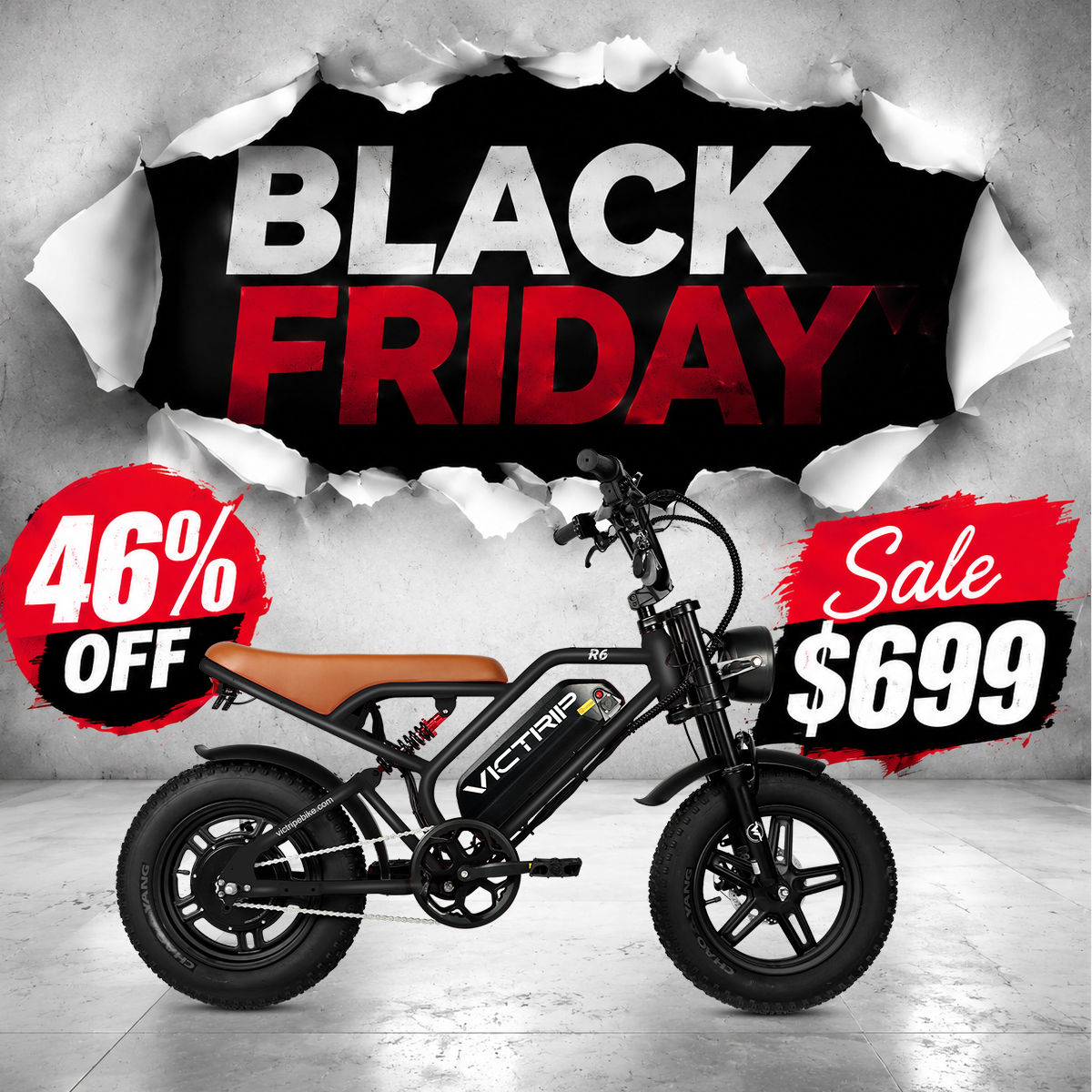
VICTRIP R6 Black Friday 2026: Lowest-Ever Price at Just $699