

Commuter E-Bikes are changing how people get around cities. They shorten commute times, cut costs, improve public health, and reduce emissions — but they also require new infrastructure, sensible regulation, and robust safety programs. This article explains what commuter e-bikes are, why they matter, how cities and employers can accelerate adoption responsibly, and what to watch next. Right up front: commuter e-bikes are already replacing car trips and encouraging people who didn’t bike before to ride more.
What are commuter e-bikes? (Definitions & types)
Commuter e-bikes are bicycles equipped with an electric motor that assists pedaling (pedal-assist) or, in some models, provides full throttle. They're designed for everyday travel: getting to work, school, shopping, or combining with public transit. Types include:
-
Class 1 (pedal-assist, max 20 mph) — common for urban commuting.
-
Class 2 (throttle-assisted, max 20 mph) — useful for riders who want an easier start.
-
Class 3 (pedal-assist, up to 28–28 mph depending on jurisdiction) — for faster commuting corridors.
Variants: cargo e-bikes, folding e-bikes, commuter/urban e-bikes, and utility models. The distinctions matter because infrastructure, regulation, and user behavior differ across classes — and so does the role each plays in replacing car trips.
Why cities need commuter e-bikes now
Urban centers face chronic congestion, air pollution, and limited curb space. Commuter e-bikes address these by:
-
Enabling more people to travel longer distances without cars.
-
Reducing trip time where traffic is congested or parking is scarce.
-
Cutting per-mile greenhouse gas emissions compared with cars.
-
Encouraging modal shift from car to active transport, boosting public health. Studies show e-bikes often replace car trips and help get people riding who previously wouldn’t cycle.
In short, commuter e-bikes let cities move more people with less pavement, less noise, and fewer emissions — if paired with the right networks and policies.
Advantages for riders
Commuter e-bikes bring a cluster of rider-facing benefits:
-
Faster and more reliable trips: In dense areas they can beat cars door-to-door, especially at peak times.
-
Lower total cost: Purchase and maintenance costs for e-bikes are far lower than car ownership; parking and congestion costs shrink.
-
Health gains: Even with electric assistance, riders gain aerobic benefits and improved wellbeing versus passive commuting.
-
Accessibility: E-assist helps older riders and those with mobility limits travel farther without overexertion.
-
Flexibility: Many commuters combine e-bikes with transit, extending the reach of both.
Health, safety and wellbeing evidence
Research shows mixed but generally positive health outcomes for e-bike users. E-cycling delivers measurable physical activity and mental-wellbeing improvements — in many studies, e-bike commuters experienced similar fitness benefits as conventional cyclists because they ride more often and farther.
But there are safety concerns: increased e-bike use has correlated with higher injury counts in some regions as popularity surged rapidly — a fact that highlights the need for better infrastructure, rider education, and speed-management policies. Recent analyses warn that without protective design and regulation, injury rates can rise even as overall community health improves.
For riders who want to maximize health benefits while maintaining safety and comfort, choosing the right commuter e-bike is essential. A well-designed commuter model can reduce joint strain, improve riding stability, and encourage consistent daily use. The VICTRIP Mimas Step-Through E-Bike is particularly suitable for riders prioritizing ease of access and ergonomic comfort. Its step-through frame design allows for safer mounting and dismounting, which is especially beneficial for older adults, beginners, and riders recovering from injuries.
TOP PICK
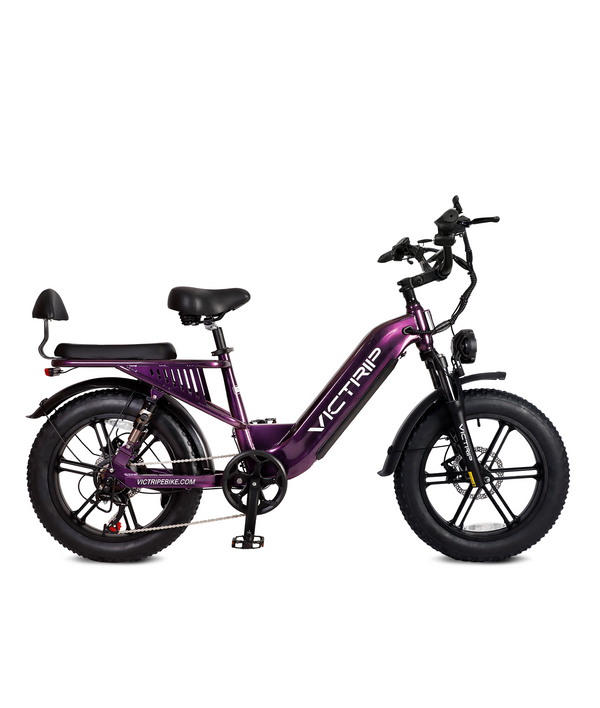
VICTRIP® Mimas Electric Bicycles With Torque Sensors
$1,399.00
For commuters traveling longer distances or riding more frequently, the VICTRIP Titan S Long-Range Electric Bike offers extended battery capacity and reliable power delivery, helping riders maintain a steady cadence without overexertion. By reducing physical fatigue and stress, long-range commuter e-bikes like the Titan S support sustained physical activity while minimizing the risks associated with exhaustion, making them an excellent option for health-conscious urban commuters.
TOP PICK
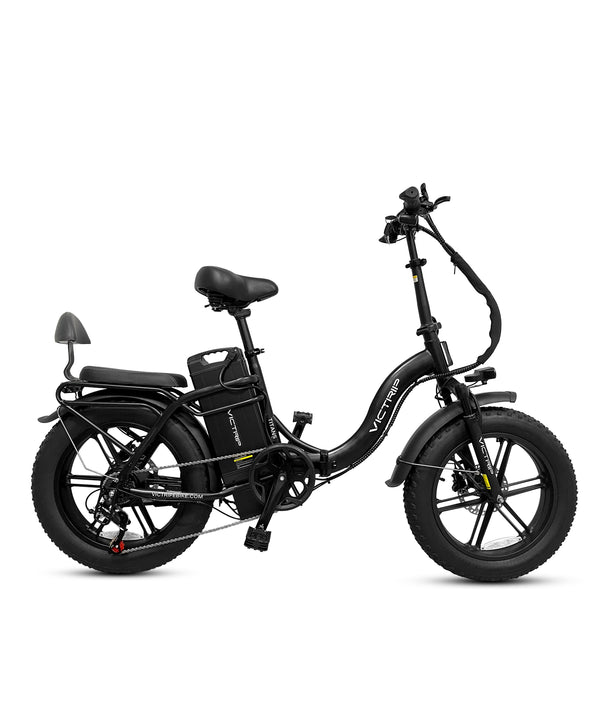
VICTRIP®TITAN S 1000W Ebike
$1,499.00
Infrastructure needs and urban design
Commuter e-bikes require comfortable, continuous bike networks. Key investments:
-
Protected bike lanes that separate bikes from motor traffic and lower collision risk. NACTO explicitly highlights integrating faster-moving micromobility (including e-bikes) into design guidance so bikeways serve all ages and abilities.
-
Secure parking and charging hubs — curbside lockers, covered racks, and workplace charging.
-
Intersection design improvements — signal timing, curb extensions, and bike-priority signals.
-
Maintenance and snow clearance where relevant.
A practical starting point for cities is to map current commuter flows, pilot protected lanes on high-demand corridors, and install commuter-focused parking/charging at transit interchanges.
Policy, incentives and employer programs
Governments and employers can accelerate adoption by:
-
Offering purchase incentives or rebates (seen increasingly in US & EU pilot programs).
-
Restoring or expanding pre-tax commuter benefits to include e-bikes and bikeshare credits. (Policy proposals under discussion would allow pre-tax benefits for bike commuting, which could be transformative.)
-
Supporting public e-bike-share programs and subsidies for low-income riders.
-
Establishing clear vehicle classification and speed limits so enforcement and design match the desired use.
Employers benefit from offering e-bike subsidies or secure parking: lower parking demand, healthier employees, and reduced commute stress.
Economic case: costs, savings, lifecycle
Buying a commuter e-bike typically costs far less than a car’s purchase price; maintenance is simpler and recurring costs are lower. When you factor in avoided parking fees, tolls, insurance, and fuel, many commuters find payback on the investment within a few years.
Lifecycle considerations:
-
Initial purchase: wide range from affordable models to premium cargo bikes.
-
Battery replacement: a predictable mid-life cost.
-
Resale and durability: many commuter e-bikes hold value and are robust when maintained.
Employers and municipalities can reduce barriers by offering financing plans, bulk procurement for fleets, and targeted subsidies.
Comparing e-bike classes (quick table)
| Class | Top speed (approx.) | Best for | Typical regulation |
|---|---|---|---|
| Class 1 | 20 mph | Urban commuting, transit integration | Allowed on most bike infrastructure |
| Class 2 | 20 mph (throttle) | Short, stop-start trips, low exertion riders | Varies by locale |
| Class 3 | 28+ mph | Fast commutes on arterial bike lanes | May face restrictions in some bike paths |
Technological trends to watch
-
Battery tech: higher energy density, faster charging, and safer chemistries.
-
Connected e-bikes: telemetry for fleets, theft recovery, and predictive maintenance.
-
Shared e-bike fleets expanding to suburbs and last-mile hubs.
-
Lightweight motors that preserve ride quality while boosting range.
These trends will change the total cost of ownership and could push commuter e-bikes toward broader market penetration.
Safety best practices for riders and cities
For riders:
-
Wear a helmet and use visible lighting.
-
Learn your e-bike’s acceleration and braking behavior.
-
Obey local speed rules; be courteous at mixed-use spaces.
For cities:
-
Design streets for lower motor-vehicle speeds.
-
Invest in protected infrastructure and intersection safety improvements.
-
Run public education campaigns as new modal shares emerge.
Combining infrastructure upgrades with rider education reduces injuries and builds trust for people considering commuter e-bikes.
Equity and access considerations
Left unchecked, new mobility tech can exacerbate inequity. To avoid that:
-
Offer targeted subsidies for low-income riders.
-
Place shared e-bike stations in underserved neighborhoods.
-
Provide training and language-accessible materials for new riders.
Equitable rollout ensures commuter e-bikes bolster mobility for all, not just affluent early adopters.
Case studies & real-world integration
Cities that intentionally integrated e-bikes and safe infrastructure reported modal shifts and health gains. For example, pilot studies show e-bikes encourage new riders and replace car trips — increasing overall active transport.
NACTO’s updated urban bikeway guidance offers specific design language for integrating faster-moving vehicles like e-bikes, which several US cities have adopted to modernize their bike networks.
Implementation roadmap for cities & employers
-
Assess demand: map current commuter flows and potential e-bike catchment areas.
-
Pilot corridors: create protected lanes on high-potential routes.
-
Incentivize adoption: employer subsidies, purchase rebates, and commuter benefits.
-
Install amenities: secure parking, charging hubs, and repair stations.
-
Scale & evaluate: expand successful pilots, track safety and usage metrics, and adjust policy.
The phased approach reduces cost and lets cities iterate on design choices as behavior shifts.
Conclusion & call to action
Commuter e-bikes offer a realistic, affordable path to cleaner, healthier, and more efficient city travel — but success depends on pairing the technology with networks, policy, and thoughtful design. Cities and employers should pilot, measure, and scale interventions that prioritize safety and equity. If you’re a planner, start by mapping commuter flows and piloting protected lanes; if you’re an employer, consider offering purchase help and secure parking; if you’re a rider, try an e-bike commute on a trial day — you might be surprised.
FAQs
Q1: Are commuter e-bikes safe for older adults?
A1: When paired with appropriate training, helmets, and protected routes, commuter e-bikes can be very safe and are often recommended for older adults because electric assistance reduces strain while enabling active travel. Research shows positive wellbeing and health effects from e-bike commuting.
Q2: Will e-bikes replace public transit?
A2: They’re more often complementary than replacement. E-bikes extend transit catchment areas and provide flexible last-mile options, increasing overall ridership potential when integrated thoughtfully.
Q3: How far can I commute on a single charge?
A3: Typical commuter e-bike ranges vary from 20–60 miles depending on battery size, rider weight, assist level, terrain, and conditions. For most urban commutes, daily charging is convenient and batteries last several years with proper care.
Q4: Do commuter e-bikes actually reduce car trips?
A4: Yes — surveys show e-bikes replace a large share of short car trips, and e-bike riders tend to ride more frequently than conventional cyclists. This contributes to reduced vehicle miles traveled in many pilot studies.
Q5: Are there incentives for employers to support e-bikes?
A5: Many municipalities and advocacy groups recommend employer incentives like pre-tax benefits, subsidies, secure parking, and workplace charging. These measures reduce parking demand and improve employee health and punctuality.
Q6: What about injury risk with more e-bikes on the road?
A6: Rapid increases in e-bike adoption have coincided with rising injury incidents in some places, underscoring the need for safer infrastructure, education, and policies to manage speeds and mixed traffic interactions.

Share:
Renting vs Buying an E-Bike: Which Makes More Financial Sense?
Step Through vs Step Over Moped Style EBikes