

What Is Electric Bike Ground Clearance?
Electric bike ground clearance is the vertical distance between the ground and the lowest part of the bike. On an e-bike, that low point could be the frame, motor housing, crank area, battery enclosure, or another component underneath the bike.

It sounds like a small detail, but it can make a big difference when you leave smooth pavement.
A commuter riding on city streets usually doesn't need much clearance. A rider tackling gravel, roots, rocks, curbs, or uneven trails has a very different set of needs.
Think of ground clearance as your bike's "room to breathe" underneath. More space can help reduce the chance of hitting obstacles, while too much clearance can sometimes affect the bike's overall handling or center of gravity.
That's why the right number isn't necessarily the highest number. It should match how and where you ride.
Why Does Ground Clearance Matter on an E-Bike?
Ground clearance affects several parts of the riding experience.
1. It Helps Prevent Bottoming Out
When a wheel rolls over a bump but the middle of the bike remains low, an obstacle can strike underneath the frame or motor.
Higher clearance gives the obstacle more room to pass underneath.
2. It Supports Off-Road Riding
For dirt paths, forest trails, loose surfaces, and rough terrain, ground clearance becomes much more important. Uneven terrain can change dramatically from one section to the next.
3. It Protects Important Components
The underside of an e-bike can contain expensive components. A hard impact with a rock or trail feature isn't something you'll want to repeat.
4. It Influences Rider Confidence
A bike that clears obstacles more easily can feel less stressful on rough ground. That extra confidence matters, especially when you're learning to ride trails.
How Is E-Bike Ground Clearance Measured?
The basic measurement is simple: measure from the ground straight up to the bike's lowest fixed component.
However, there's an important catch.
Not every manufacturer measures clearance from the same point. One brand might measure underneath the frame, while another might refer to motor or crank clearance.
This means two bikes with similar advertised numbers may not perform identically over the same obstacle.
For comparison, look for:
- Lowest point of the frame
- Motor housing position
- Crank and pedal height
- Battery enclosure position
- Wheel and tire dimensions
- Suspension setup
For an even better comparison, consider both ground clearance and obstacle clearance. A bike with large tires and good suspension may handle rough ground better than a bike that simply has a larger static measurement.
What Is a Good Electric Bike Ground Clearance?
There's no universal "perfect" clearance for every e-bike.
As a practical rule, riders can think about it this way:
| Riding Style | Clearance Priority |
|---|---|
| City commuting | Low to moderate |
| Paved roads + gravel | Moderate |
| Gravel and light trails | Moderate to high |
| Rough trails | High |
| Technical off-road riding | Very high |
For everyday commuting, other factors such as comfort, range, weight, and step-over height may matter more.
For off-road riding, clearance should move higher on your checklist.
The key is to consider the lowest point of the entire bike, not just one attractive specification on a product page.
How Tire Size Affects Ground Clearance
Tires are one of the easiest ways to change the effective height of an e-bike.
A larger-diameter tire raises the bike slightly farther from the ground. This can improve clearance over smaller obstacles and provide a smoother feel over rough surfaces.
Fat tires can also provide additional traction and cushioning, especially on:
- Sand
- Gravel
- Dirt
- Loose soil
- Snow
- Uneven trails
That's one reason fat-tire electric bikes are popular for riders who want more versatility beyond pavement.
However, bigger tires don't automatically turn an urban e-bike into a serious trail machine. Frame geometry, suspension, motor placement, and braking still matter.

Does Suspension Change Ground Clearance?
Yes, but it's a little more complicated than simply saying "more suspension equals more clearance."
When suspension compresses, the bike's lowest point can move closer to the ground. This is known as suspension sag and depends on rider weight, setup, and suspension design.
On rough terrain, good suspension helps the wheels follow the ground instead of transmitting every bump directly to the frame and rider.
That means you should evaluate:
Static clearance + suspension movement + tire size + bike geometry
rather than focusing on one number.
For riders who regularly tackle uneven terrain, suspension can be just as important as the initial clearance measurement.
Why Motor Placement Matters
Electric bikes use different motor layouts, and motor position can affect the bike's lowest point.
A hub motor sits in the wheel, while a mid-drive motor is mounted near the crank area.
With a mid-drive e-bike, the motor housing can sit relatively low. That can be excellent for weight distribution and performance, but it also means riders should pay attention to obstacles directly beneath the center of the bike.
This is particularly important on rocky or technical trails.
Before buying an off-road e-bike, don't just ask, "How much ground clearance does it have?"
Also ask:
Where is the lowest component located?
That question can reveal more about real-world clearance.
Does Rider Weight Affect Ground Clearance?
It can.
A heavier rider may cause the suspension to compress more, reducing available clearance while riding. Tire pressure can also influence how low the bike sits.
This doesn't mean heavier riders automatically need a completely different bike. It simply means setup matters.
Check the manufacturer's recommended:
- Rider weight
- Tire pressure
- Suspension settings
- Maximum load
- Intended terrain
A well-adjusted bike will usually perform more predictably than one that's poorly set up.
How Much Clearance Do You Need for Off-Road Riding?
The more unpredictable the terrain, the more valuable clearance becomes.
For casual dirt roads and hard-packed trails, moderate clearance may be enough.
For technical terrain, look at the whole package:
Loose Terrain
Sand and loose dirt reward tire volume and traction. Clearance helps, but tire design may have an even bigger effect on whether you maintain control.
Rocky Trails
Rocks are where underbody clearance really matters. A low motor, frame, or crank area can become vulnerable to direct impacts.
Roots and Ruts
Roots and deep ruts can create sudden changes in elevation. Suspension, geometry, and clearance work together here.
Curbs and Urban Obstacles
Even city riders benefit from reasonable clearance. Dropping off a curb or crossing a rough driveway creates forces that aren't present on smooth roads.
Is More Ground Clearance Always Better?
Not necessarily.
A very high bike can make mounting and stopping more difficult for some riders. It can also change the bike's feel.
For a commuter, excessive clearance may offer little practical benefit.
For an off-road rider, however, sacrificing clearance can create frustrating limitations.
The best choice is a balance among:
- Ground clearance
- Rider fit
- Tire size
- Suspension
- Weight
- Stability
- Intended terrain
In other words, don't chase a number just because it looks impressive on a specification sheet.
How to Measure Electric Bike Ground Clearance at Home
You don't need special equipment.
Park the e-bike on a flat surface with the tires inflated to the recommended pressure. Keep the bike in its normal upright position.
Then use a tape measure to find the distance from the floor to the lowest fixed component.
For a more useful assessment, measure several points:
- Lowest frame section
- Motor housing
- Bottom bracket/crank area
- Battery enclosure
- Any protective hardware underneath
The lowest measurement is the one that matters most when you're considering obstacle clearance.
You can also place a small object of known height under the bike to visualize which obstacles it can realistically clear.
What Should You Look for When Buying an E-Bike?
Ground clearance shouldn't be evaluated alone.
If your main goal is commuting, prioritize comfort, battery range, braking, ergonomics, and everyday practicality.
For trail riding, add these questions:
Are the tires designed for the terrain?
Does the suspension provide useful travel?
Is the motor protected from impacts?
Can the frame handle the rider's weight and intended use?
Is the bike designed for off-road riding rather than simply looking rugged?
That last point matters. A bike can have an aggressive design without being optimized for rough terrain.
How VICTRIP Fits Into Off-Road E-Bike Riding
VICTRIP's lineup includes models designed for riders who want more than basic paved-road transportation.
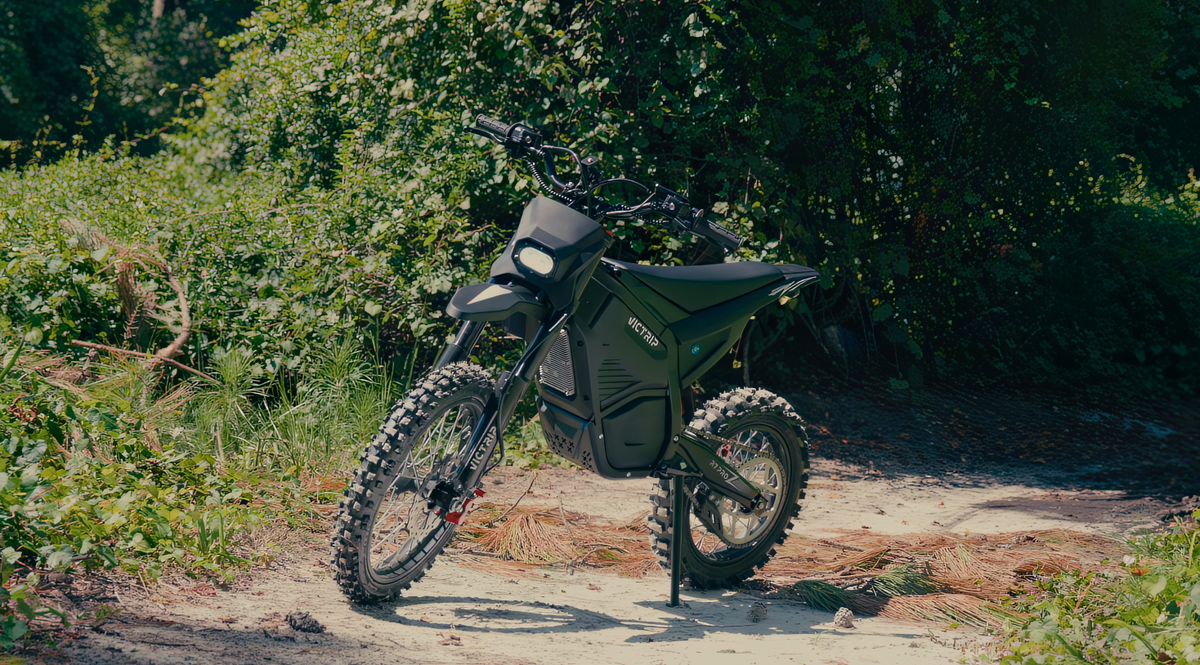
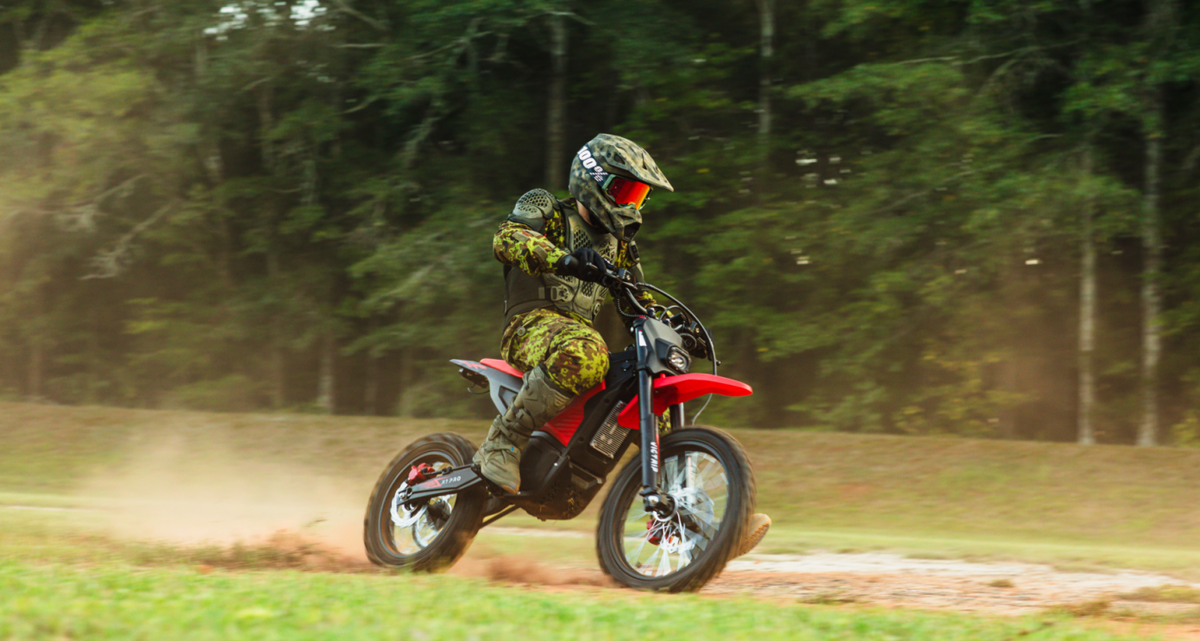
For example, the VICTRIP R7 and R7 Pro are positioned toward more demanding off-road riding, where factors such as suspension, tire setup, motor performance, and chassis design work together.
When evaluating an off-road model, don't focus only on motor power. Ground clearance should be considered alongside the bike's overall terrain capability.
For riders comparing electric dirt bikes and rugged e-bikes, this broader approach gives a much more realistic picture of performance.
Common Ground-Clearance Mistakes to Avoid
One common mistake is comparing clearance numbers from different manufacturers without checking how they're measured.
Another is ignoring tire pressure and suspension sag.
Some riders also look only at the frame and forget about the motor or crank area.
Finally, don't assume that a larger tire automatically means better off-road performance. Traction, braking, suspension, geometry, and rider fit all contribute.
For general electric-bike safety and equipment guidance, PeopleForBikes is also a useful industry resource.
FAQs
What is electric bike ground clearance?
It's the distance between the ground and the lowest part of an electric bike. It affects how easily the bike can pass over bumps, rocks, roots, curbs, and other obstacles.
Is higher ground clearance better for an e-bike?
Not always. Higher clearance can be helpful for off-road riding, but the ideal setup depends on rider height, bike geometry, suspension, tires, and intended use.
Do fat tires increase e-bike ground clearance?
Larger tires can raise the bike and improve its ability to roll over certain obstacles. They can also improve traction on loose surfaces, although the overall frame and suspension design still matter.
Does suspension reduce ground clearance?
When suspension compresses, the bike can sit lower than its unloaded position. Rider weight and suspension setup therefore affect real-world clearance.
What part of an e-bike should have the most clearance?
The bike's lowest components are the most important. On many e-bikes, this may include the motor, crank area, or underside of the frame.
Is ground clearance important for city e-bikes?
It's less critical than it is for trail bikes, but reasonable clearance can still help with curbs, potholes, rough pavement, and driveway transitions.
How do I measure ground clearance?
Place the bike upright on a flat surface and measure vertically from the ground to the lowest fixed component. Measuring several locations gives a more accurate picture.
Conclusion: Choose Ground Clearance for the Way You Ride
Electric bike ground clearance matters because it affects how confidently and safely an e-bike can handle uneven terrain.
There isn't one magic number that works for every rider. A commuter may be perfectly happy with moderate clearance, while an off-road rider needs more room underneath the bike to deal with rocks, roots, ruts, and other obstacles.
The smartest approach is to look at clearance together with tire size, suspension, motor placement, frame geometry, weight capacity, and intended terrain.
When those factors match your riding style, your e-bike won't just look capable—it'll feel capable when the road gets rough.
For riders exploring electric bikes beyond the pavement, choosing the right balance of clearance and overall bike design is one of the most useful steps you can take before buying.
Share:
What Terrain Is Best for an Electric Dirt Bike?