
Choosing between a thumb throttle and a twist throttle might feel like a small decision, but it changes how you accelerate, what kind of hand fatigue you get, and sometimes how safe you are on the bike. Whether you’re shopping for a commuter e-bike, upgrading an older build, or fitting a bike for someone with limited hand mobility, the throttle type is a practical lever you can pull to match ride style and capability. This article walks you through the mechanical differences, everyday pros and cons, and gives a simple decision checklist so you can pick the best throttle for your rides.
How an e-bike throttle works
At its core, an e-bike throttle is an input device on the handlebar that tells the motor controller how much power to deliver — independent of pedaling (unless paired with pedal-assist logic). There are three broad categories you’ll see: thumb throttles (a lever pressed by the thumb), twist throttles (rotational grip like a motorcycle), and other finger-style or half-twist variants. Both thumb and twist throttles vary in their internal design (potentiometer, hall-effect sensor) and in how they map rotation/pressure to motor output.
Thumb throttle: anatomy & operation
A thumb throttle is typically a short lever mounted near the brake or grip that the rider depresses with the thumb. It’s often favored on upright city and cargo bikes because it lets the rider keep a relaxed grip while activating power. Thumb throttles can be designed for left or right hands and sometimes have ergonomic contours to reduce local pressure on the thumb. They usually offer straightforward push-to-increase control and spring return to zero when released.

Twist throttle: anatomy & operation
A twist throttle works by rotating part (or all) of the handlebar grip toward or away from the rider. On many bikes it’s either a full-grip twist (like a motorcycle) or a half-twist that moves through a shorter arc. Twist throttles tend to feel intuitive to riders familiar with motorbikes and can offer very fine modulation because rotation maps smoothly to power percentage. However, they require active grip and wrist motion to operate.

Key comparison criteria
We’ll compare these two designs across the practical points riders actually care about:
-
Ergonomics & comfort
-
Control & modulation (precision of speed control)
-
Safety (especially on high-power setups)
-
Durability & weather resistance
-
Use-case fit (commuting vs off-road vs accessibility)
-
Installation & compatibility
Each of these matters differently depending on your bike, typical rides, and physical needs.
Ergonomics & rider comfort
Thumb throttles generally win for comfort on upright, stop-and-go rides. They let you maintain a relaxed, natural grip and don’t force wrist rotation; that reduces wrist strain and can be better for people with arthritis, limited grip strength, or hand injuries. Twist throttles put more demand on wrist movement and continuous grip, which some riders find more engaging but others find fatiguing on long rides. Several rider-focused guides and maker writeups highlight the thumb throttle’s accessibility advantages.
Quick ergonomic summary
-
Thumb throttle: easier for short bursts, less wrist rotation, better for upright commuting.
-
Twist throttle: more natural for motorbike-style riders; can produce more wrist fatigue on extended use.
Control, Power Delivery, and Riding Confidence
When it comes to power modulation, twist throttles typically offer finer control. Small wrist movements translate into gradual power changes, which is particularly useful on bikes with strong motors.
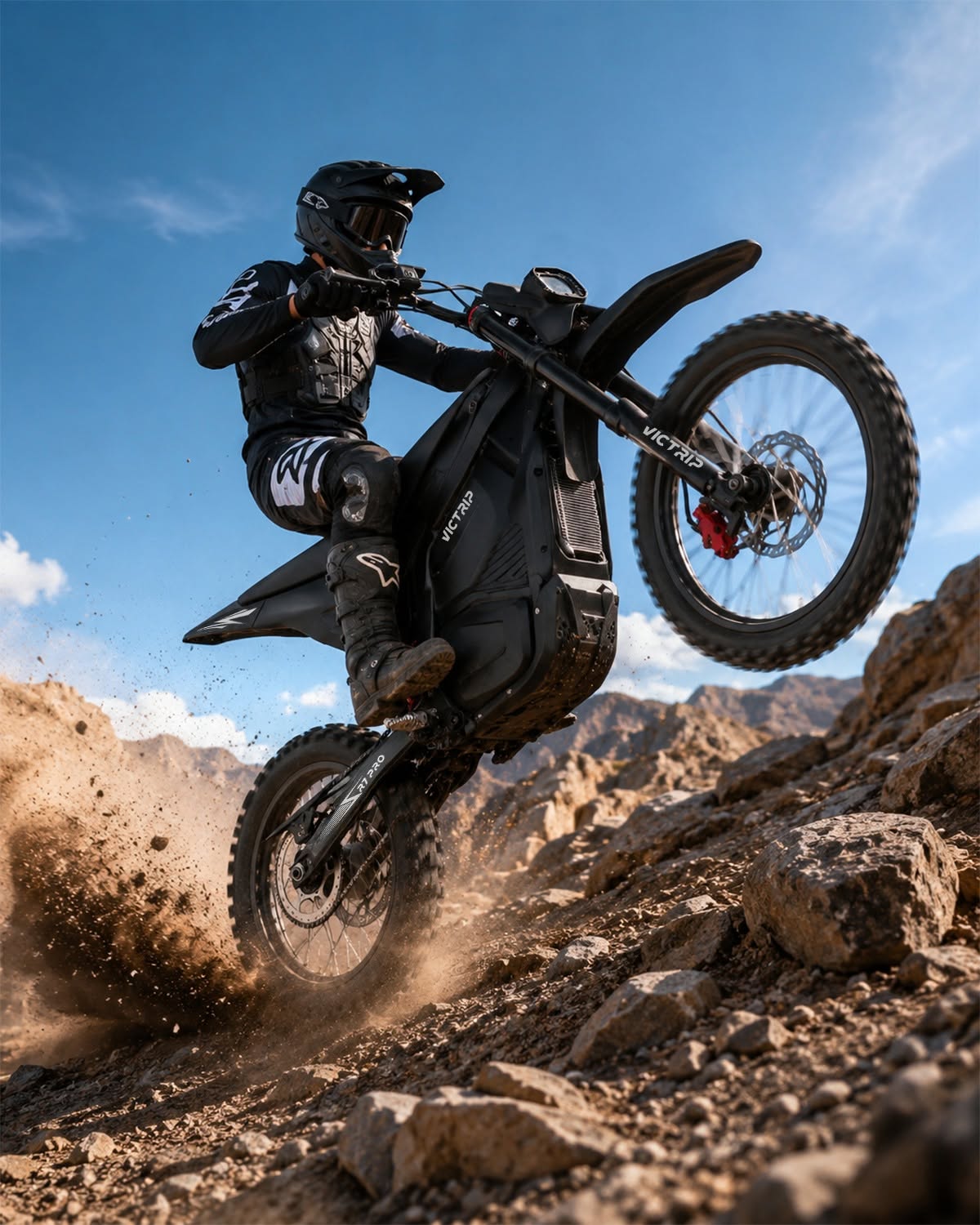
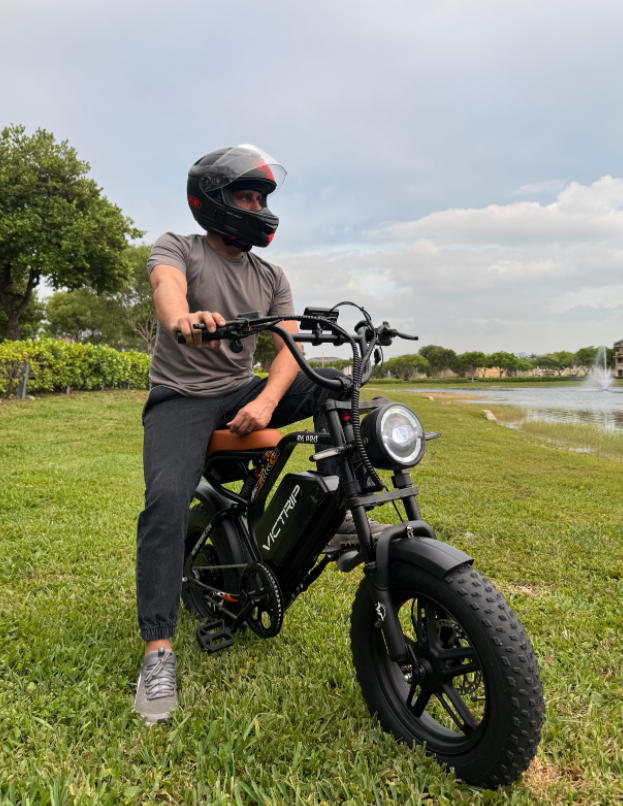
This design philosophy is clearly reflected in performance-focused models like VICTRIP Electric Bike, which is equipped exclusively with a twist throttle system. On higher-output setups, twist throttles allow riders to manage torque smoothly without sudden surges, enhancing confidence at speed and on inclines.
Thumb throttles, while responsive, can feel more binary on powerful motors unless finely tuned through the controller.
Safety considerations
Safety depends on both throttle type and the bike’s power. On powerful off-road e-bikes, an abrupt twist with the wrist while grabbing the bar can produce sudden acceleration; riders and community threads warn that inexperienced users may over-twist and lose control. Conversely, thumb throttles can cause thumb fatigue and unintended sustained throttle if the thumb gets stuck or the lever catches. The safest setup combines predictable throttle mapping (good controller tuning), accessible cutoffs (kill switch), and rider training.
Safety checklist
-
Use throttle limiters or motor power maps for beginner riders.
-
Ensure brake-cut switches are properly wired (motor cuts when brakes are pulled).
-
Consider a half-twist for finer control on higher-power builds.
Durability & maintenance
Twist throttles tend to be mechanically simple and robust; grips and rotating sleeves can be durable but can also let water intrude if seals are poor. Thumb throttles have small mechanical pivots that may collect grit, and cheaper thumb units may wear faster. However, higher-quality hall-effect sensors (vs cheap potentiometers) add longevity for both designs. If you ride in wet climates, check IP or weatherproofing specs — several recent product pages call out water resistance as a differentiator.
Use-case fit (commuting, off-road, long distance, accessibility)
-
Urban Commuting / Cargo: Thumb throttle often preferred; less wrist torque and easier short-burst starts.
-
Off-road / sport / moto-style: Twist throttle favored by riders who want a motorbike-like feel and very fine control.
-
Accessibility / limited hand mobility: Thumb throttle usually better for reduced range of motion.
-
Long distance touring: Many riders opt for pedal-assist primarily; throttle use kept minimal to save battery and avoid fatigue.

Installation, compatibility & customization
Most e-bike controllers accept standard throttle inputs (0–5V hall sensor or PWM, depending on system). When installing a new throttle you’ll want to check:
-
Connector type — 3-pin vs 5-pin, controller compatibility.
-
Sensor type — hall effect is preferred for longevity.
-
Mounting orientation — left vs right hand mounting; ensure brake lever clearance.
-
Software mapping — some controllers allow throttle curve tuning for softer starts.
If you’re retrofitting a different throttle type, you may need a new grip or adapter sleeve for twist throttles. Installation guides from makers demonstrate this well and underscore testing throttle response on stands before riding.
Cost, battery impact & legal notes
-
Cost: Throttles themselves are low-cost components (often $10–$60 depending on quality), though OEM integrated grips or branded systems cost more.
-
Battery impact: Using a throttle frequently increases energy draw compared to pedal-assist—throttle use itself doesn’t “drain” extra beyond the power you request, but aggressive throttle use will reduce range more quickly.
-
Legalities: In some jurisdictions, throttle-only operation (without pedaling) may affect whether a vehicle is classed as a bicycle or a moped, which has legal and licensing implications. Always verify local laws if throttle use is central to your ride. (Check local transport authority guidance for precise rules.)
Real-world user reports & maker perspectives
Rider forums and maker blogs provide nuanced takes: some riders swear by half-twist designs as a compromise, while others prefer thumb throttles for city life. Manufacturers have leaned both ways — many modern commuter e-bikes ship with thumb throttles, while sportier models keep twist throttles for that throttle-by-wrist feel. Community posts and recent brand articles highlight ergonomics, safety tradeoffs, and evolving preferences.
Decision checklist: which throttle should you pick?
Use this simple checklist:
-
You commute in traffic or have limited wrist mobility? → Thumb throttle.
-
You want a motorcycle-like feel and very fine modulation? → Twist throttle.
-
You ride a high-power off-road build? → consider half-twist or thumb with careful tuning.
-
Unsure? Try both in person at a shop — real feel matters.
Conclusion
Both thumb throttles and twist throttles are valid choices — the “better” throttle depends on rider physiology, intended use, and the bike’s power. For urban commuters and riders needing accessible controls, thumb throttles are often the best fit. For riders wanting a motorbike-like experience and fine rotational modulation, twist throttles shine. Wherever possible, try both styles on similar bikes and pair your choice with proper controller mapping and safety features (brake cutoffs, throttle limiters). The right throttle should complement your ride, not complicate it.
FAQs
1. Are thumb throttles or twist throttles more precise?
Twist throttles can offer finer rotational control for some riders, but modern thumb throttles with good sensors are also precise enough for most urban uses. Controller mapping also affects perceived precision.
2. Do throttles reduce my e-bike’s legal classification?
Sometimes — in some regions, the ability to propel the bike without pedaling influences whether it’s classed as an electric bicycle vs a moped. Check local regulations before relying on throttle-only operation. (This is region-dependent.)
3. Which throttle is better for someone with arthritis or weak hands?
A thumb throttle is generally better because it requires less sustained grip strength and less wrist rotation.
4. Can I switch from a twist to a thumb throttle on my existing bike?
Often yes — you’ll need to check connector compatibility and may need an adapter sleeve or new grips for the twist side. Confirm controller input type (hall sensor vs potentiometer).
5. Does throttle type affect range?
Not directly — range is determined by how much power you request. Aggressive throttle use reduces range faster regardless of throttle type.

Share:
Step Through vs Step Over Moped Style EBikes
How to Pick the Best Cargo Electric Tricycle?