

Choosing the right electric two-wheeler for a young rider can be confusing. A kids electric dirt bike and an electric motorcycle may look similar at first glance, but they are designed for very different riders, riding environments, and skill levels.
The biggest mistake is to focus only on motor power or top speed. For younger riders, fit, weight, controls, braking, riding environment, and supervision can matter just as much. An electric motorcycle may offer more performance, but that doesn't automatically make it the right choice.
This guide explains the major differences between a kids electric dirt bike and an electric motorcycle so parents can compare the options more confidently.
Quick Comparison: Kids Electric Dirt Bike vs. Electric Motorcycle
| Factor | Kids Electric Dirt Bike | Electric Motorcycle |
|---|---|---|
| Primary rider | Children and younger riders | Older teens and adults, depending on model |
| Size | Compact | Larger |
| Weight | Usually lighter | Usually heavier |
| Motor output | Lower | Higher |
| Speed | Lower and easier to manage | Often significantly higher |
| Controls | Simpler | More motorcycle-like |
| Riding environment | Private property, yards, beginner trails | Roads where legal, tracks, trails, or private property |
| Learning curve | Generally easier for beginners | Requires greater riding ability |
| Portability | Easier to transport | More difficult to move |
| Cost | Usually lower | Usually higher |
| Main consideration | Fit and controllability | Performance and legal use |
There isn't one universal choice for every family. The right option depends on the rider and how the vehicle will actually be used.
1. Start With the Rider, Not the Motor
When comparing a kids electric dirt bike with an electric motorcycle, begin with the rider's age, height, weight, experience, and confidence.
A vehicle that's physically too large can make basic tasks harder. A young rider may struggle to reach the controls comfortably, support the bike when stopping, or maintain balance at low speeds.
On the other hand, a bike that's too small can become uncomfortable as the rider grows.
Age Is Only One Part of the Equation
Age can provide a useful starting point, but it shouldn't be the only measurement.
Two children of the same age can have very different heights, weights, coordination, and riding experience. Manufacturers may also use different age recommendations for different models.
Instead of asking only, "What age is this bike for?" consider:
- Is the rider tall enough for the seat height?
- Can they comfortably reach the handlebars?
- Can they operate the brakes without stretching?
- Can they keep the bike balanced at a stop?
- Is the bike's weight manageable?
- Does the rider understand basic riding instructions?
- Will an adult be able to supervise the riding area?
A properly sized vehicle gives the rider more opportunity to learn control gradually.
2. Understand the Difference in Size and Weight
Size is one of the clearest differences between a children's electric dirt bike and a full-size electric motorcycle.
A kids model generally uses a compact frame, smaller wheels, and a lower seat height. These features are intended to make the vehicle easier for a smaller rider to handle.
An electric motorcycle usually has a larger frame and more substantial components. That additional size can provide stability and accommodate larger riders, but it also means the machine may be more difficult for a child to control.
Why Weight Matters
Parents sometimes focus heavily on motor wattage while overlooking vehicle weight.
Imagine a child losing balance at low speed. A lighter bike is generally easier to move and stabilize than a much heavier machine. The same issue applies when turning around, parking, or recovering from a small mistake.
For beginners, manageable weight can therefore be an important part of the overall riding experience.

3. Compare Motor Power and Speed Carefully
Motor specifications are useful, but they need context.
Electric dirt bikes for children generally use lower-power motors than electric motorcycles. This helps create a riding experience that is more appropriate for learning basic acceleration, braking, steering, and balance.
Electric motorcycles can use much more powerful motors and larger battery systems. That extra output can provide stronger acceleration and higher speeds, but it also increases the importance of rider experience and appropriate riding conditions.
More Power Isn't Always Better
It's easy to assume that a more powerful motor is automatically a better purchase. For a young rider, however, excessive power can make the vehicle harder to control.
A beginner needs enough performance to move confidently without making every throttle input difficult to manage.
When comparing models, look beyond the maximum wattage. Also consider:
- Throttle response
- Available riding modes
- Speed settings
- Braking performance
- Weight
- Tire size
- Suspension
- Rider experience
These factors work together to determine how manageable the vehicle feels.
4. Look at the Riding Environment
Where the vehicle will be ridden is just as important as who will ride it.
A compact electric dirt bike may be intended primarily for private property, designated riding areas, or appropriate off-road environments. An electric motorcycle may be designed for a broader range of uses, depending on its specifications and local regulations.
Private Property and Off-Road Riding
For recreational riding on private land, parents may be looking for:
- Dirt paths
- Grass
- Hard-packed trails
- Open fields
- Designated off-road areas
A dirt-oriented design can make sense in these environments because the tires, frame geometry, and suspension are developed around uneven surfaces.
However, not every electric dirt bike is suitable for every trail. Loose sand, mud, rocks, steep slopes, and wet surfaces can all change the difficulty level.
Public Roads Are Different
A vehicle that looks like a motorcycle isn't necessarily street legal.
Road-use requirements can depend on factors such as speed capability, equipment, registration, licensing, insurance, and local law. Parents should check the rules that apply to the specific vehicle and riding location before using it on public roads.
For many children's models, the intended use is recreational rather than street transportation.
5. Consider the Controls and Learning Curve
The control layout can have a major effect on how quickly a new rider becomes comfortable.
A children's electric dirt bike may have a relatively simple control system designed around basic acceleration and braking. This can help a beginner focus on steering and balance instead of learning several systems at once.
A larger electric motorcycle may have controls and handling characteristics that are closer to conventional motorcycles.
What Beginners Need to Learn
Before increasing speed, a new rider should understand:
- How to start and stop smoothly.
- How to use the brakes correctly.
- How to turn without making sudden movements.
- How to control speed on different surfaces.
- How to recognize obstacles.
- How to maintain a safe following distance.
- How to respond if something unexpected happens.
These skills are more important than simply knowing the bike's top speed.
6. Pay Attention to Brakes, Tires, and Suspension
Motor power gets much of the attention in product specifications, but the components that help control that power deserve equal consideration.
Braking System
Effective brakes allow the rider to reduce speed in a controlled way.
Parents should look for a braking system that the rider can comfortably operate. Brake lever position, reach, responsiveness, and maintenance all matter.
Tires
Tires influence traction and handling.
For off-road riding, tread pattern and tire width can affect how the bike behaves on dirt, grass, gravel, and other surfaces. However, a tire designed for loose terrain isn't automatically ideal for every environment.
Suspension
Suspension can improve comfort and control when riding over uneven ground.
A larger electric motorcycle may use a more substantial suspension system because it's expected to handle higher speeds and greater loads. A smaller children's bike may use a simpler setup appropriate for its intended riding environment.
The important point is to consider the complete package rather than focusing on one specification.
7. Check the Fit Before Buying
Fit is one of the most important factors when choosing between a kids electric dirt bike and an electric motorcycle.
A good fit allows the rider to sit naturally, reach the controls, and maintain a stable position.
Measure More Than Height
Height is useful, but parents should also consider:
- Inseam length
- Rider weight
- Arm reach
- Seat height
- Handlebar position
- Footpeg position
- Overall bike weight
A rider who can comfortably reach the controls will generally have an easier time learning.
Don't Buy Only for Future Growth
Buying a much larger bike because a child will "grow into it" can create problems in the short term.
A child may eventually outgrow a smaller bike, but choosing a vehicle that's manageable today can make early riding practice more comfortable and controlled.
8. Think About Battery and Riding Time
Battery capacity is another major difference between smaller electric dirt bikes and larger electric motorcycles.
A compact model may use a smaller battery because it has a lighter frame, smaller motor, and lower performance requirements.
A larger motorcycle may require a bigger battery to support higher power demands.
Range Depends on More Than Battery Size
Manufacturers often provide estimated riding ranges, but actual range can vary significantly.
Factors include:
- Rider weight
- Speed
- Terrain
- Temperature
- Tire pressure
- Riding style
- Frequent acceleration
- Hills
- Battery condition
For example, riding slowly on relatively flat ground can use energy differently from repeatedly accelerating on steep off-road terrain.
For family recreation, think about how long each riding session actually needs to last rather than choosing a vehicle based only on the largest advertised range number.
9. Consider Safety and Supervision
Safety should be part of the purchasing decision from the beginning.
The U.S. Consumer Product Safety Commission advises users of micromobility products to follow manufacturer instructions, check components before riding, use appropriate helmets, and follow local rules. It also recommends paying attention to age and weight limits specified by the manufacturer.
For young riders, adult supervision is especially important.
Basic Safety Checklist
Before riding, check:
- Brakes
- Tires
- Wheels
- Handlebars
- Throttle
- Battery connections
- Frame
- Suspension components
- Protective equipment
The rider should also wear appropriate protective gear.
At minimum, a properly fitted helmet should be part of the riding setup. Depending on the riding environment and vehicle, parents may also consider gloves, eye protection, knee protection, elbow protection, and suitable footwear.
For current U.S. micromobility safety information, the U.S. Consumer Product Safety Commission's Micromobility Information Center provides guidance on helmets, inspections, batteries, and riding practices.
Kids Electric Dirt Bike vs. Electric Motorcycle: Which Features Matter Most?
Instead of comparing every specification, parents can organize the decision around a few practical categories.
| Priority | Kids Electric Dirt Bike | Electric Motorcycle |
| Easy handling | High priority | Important |
| Compact size | High priority | Lower priority |
| Low weight | High priority | Moderate priority |
| Higher speed | Usually not the main goal | Often a major feature |
| Beginner-friendly controls | Important | Depends on model |
| Off-road capability | Common focus | Depends on design |
| Long-distance riding | Usually secondary | Often more relevant |
| Street use | Usually limited or unsuitable | Depends on legal classification |
| Growth potential | Limited by size | Greater for larger riders |
| Transport | Generally easier | Usually more difficult |
This comparison shows why "Which one is better?" isn't the most useful question.
The more practical question is: Which vehicle matches the rider, environment, and intended use?
When a Kids Electric Dirt Bike Makes More Sense
A children's electric dirt bike may be worth considering when the rider is relatively new to powered two-wheelers and needs a compact platform for learning.
It can be particularly relevant when:
- The rider is physically small.
- Riding will happen mainly on private property.
- The rider is learning basic throttle and brake control.
- A lower-speed riding experience is preferred.
- Easy transportation is important.
- The family wants a recreational off-road vehicle rather than a road-going motorcycle.
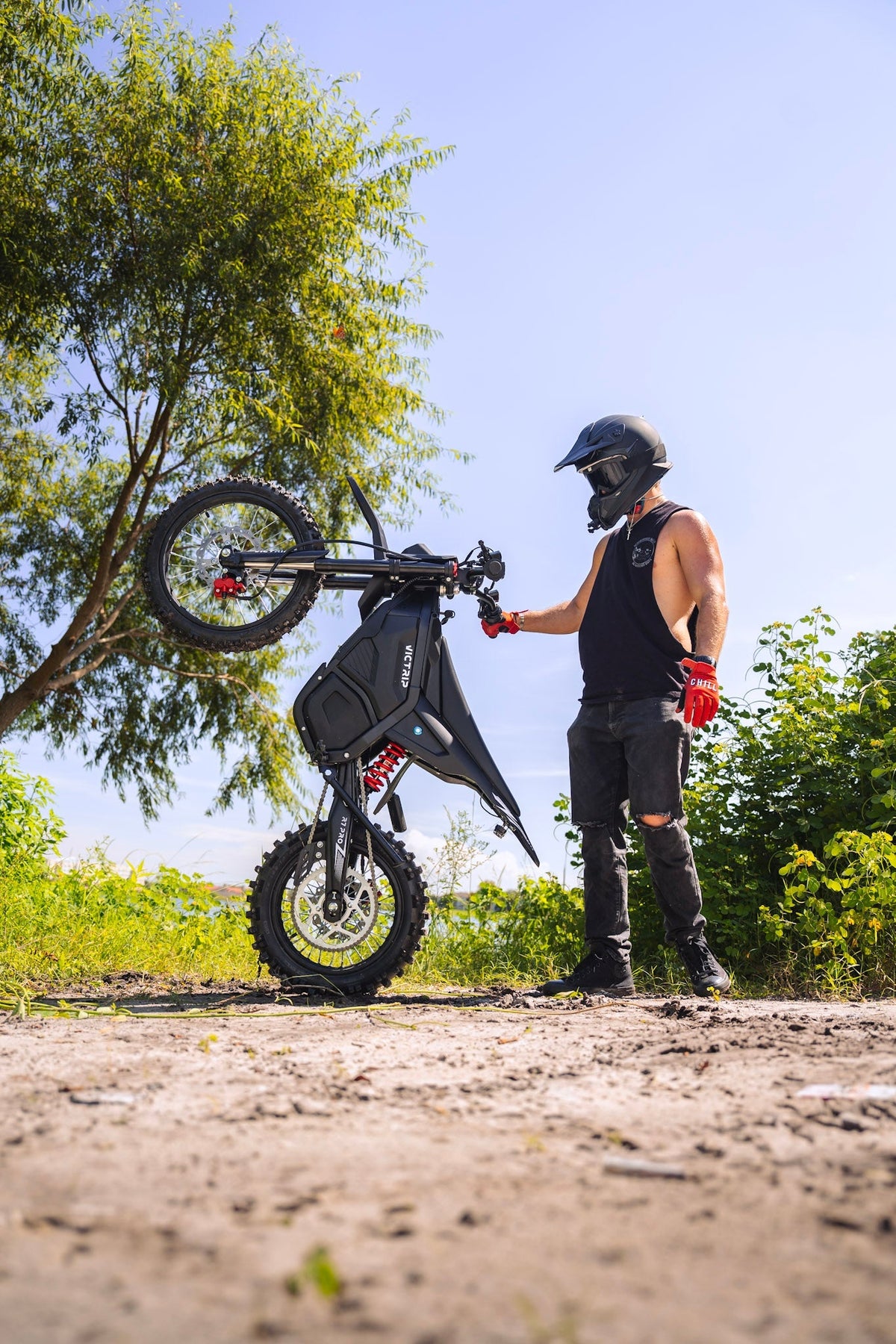
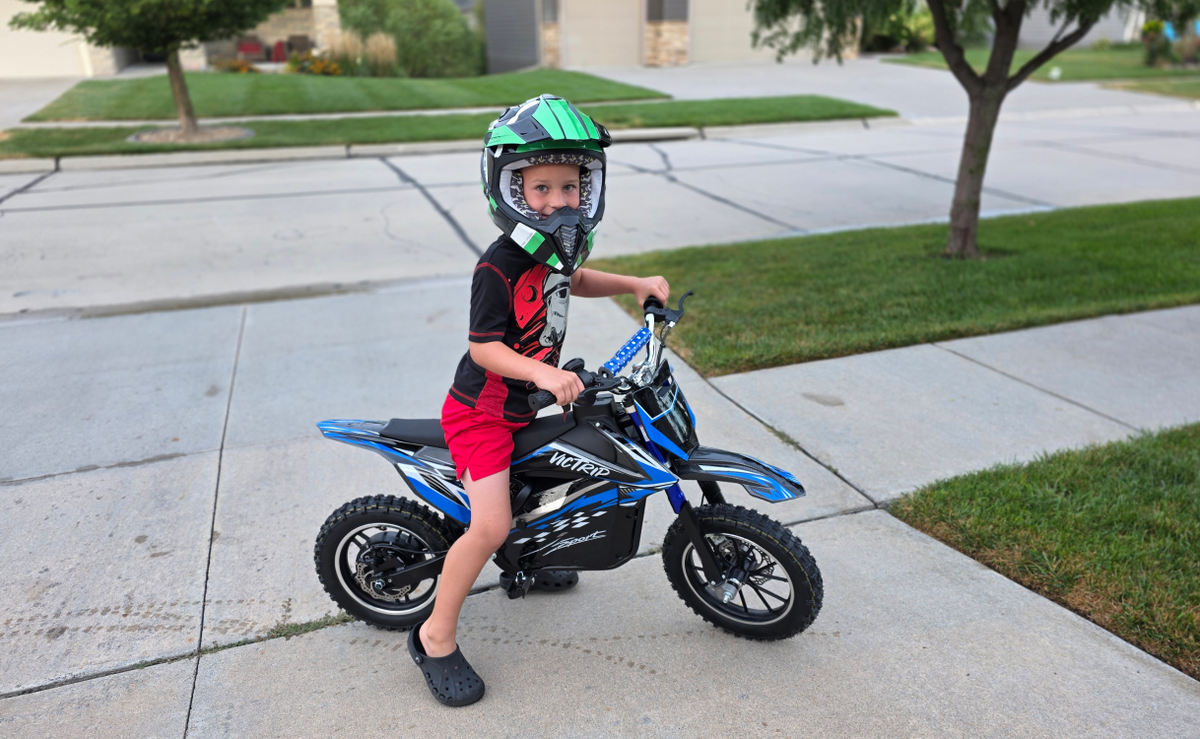
For example, a compact model such as the VICTRIP X9 is positioned around young riders and a smaller dirt-bike format. The important consideration isn't simply its motor specification; parents should still compare the manufacturer's size guidance with the actual rider.
TOP PICK

VICTRIP®X9 Electric Dirt Bike For Kids
$599.00
When an Electric Motorcycle May Make More Sense
A larger electric motorcycle may be more appropriate for an experienced older rider who can physically handle a bigger and more powerful vehicle.
Potential reasons include:
- The rider has previous motorcycle experience.
- The rider has outgrown smaller dirt bikes.
- Higher performance is specifically required.
- Longer riding sessions are planned.
- The vehicle needs to accommodate a larger rider.
- The intended riding environment requires a larger motorcycle-style platform.
However, the vehicle's intended use and local regulations still need to be checked before riding.
Don't Confuse Electric Dirt Bikes With Electric Motorcycles
The terms are sometimes used interchangeably in online stores, but they're not necessarily describing the same type of vehicle.
An electric dirt bike generally emphasizes off-road riding characteristics. It may use knobby tires, suspension, a compact frame, and a dirt-bike-inspired riding position.
An electric motorcycle can be designed for road use, off-road use, or a combination of both. Some models are much closer to traditional motorcycles in size, weight, controls, and performance.
This distinction matters when searching online because similar-looking products can have very different specifications and intended uses.
How Much Should Parents Spend?
Price is another factor, but the cheapest option isn't always the most suitable.
Instead of comparing price alone, consider the total ownership experience.
Look at These Costs
- Initial purchase price
- Replacement parts
- Tires
- Brake components
- Battery replacement
- Protective equipment
- Charging equipment
- Maintenance
- Transportation
A lower-cost bike may be perfectly suitable for a young beginner who rides occasionally. A more expensive motorcycle may make more sense for an experienced rider who expects more performance and longer-term use.
The right budget depends on how often the vehicle will be used and how quickly the rider is likely to outgrow it.
Common Mistakes to Avoid
Parents shopping for an electric two-wheeler can easily focus on the wrong specifications.
Choosing Based Only on Top Speed
A higher top speed doesn't automatically mean a better riding experience for a beginner.
Ignoring Bike Weight
A powerful but heavy vehicle may be difficult for a smaller rider to control.
Buying Too Large
Future growth matters, but a bike that's too large today can make learning more difficult.
Assuming Every Electric Bike Is Street Legal
Appearance doesn't determine legal classification. Always check local requirements.
Forgetting Protective Equipment
The purchase shouldn't stop with the bike. Budget for appropriate safety gear as well.
Overlooking the Riding Area
A vehicle designed for dirt trails may not be appropriate for pavement, and a road-oriented motorcycle may not be designed for difficult off-road terrain.
A Simple Buying Checklist
Before choosing between the two categories, ask these questions:
- Who will ride the bike?
- What is the rider's height and weight?
- How much riding experience do they have?
- Where will the bike be ridden?
- Is the riding area private or public?
- How much speed is actually necessary?
- Can the rider comfortably reach the controls?
- Can the rider manage the bike's weight?
- What type of tires and suspension are needed?
- What protective equipment will be used?
- How much riding time is expected per session?
- Will the rider outgrow the bike quickly?
- What maintenance will be required?
- What local rules apply?
- Does the manufacturer's recommended rider range match the intended user?
Answering these questions can narrow the options much faster than comparing dozens of motor and battery specifications.
FAQs
Is a kids electric dirt bike the same as an electric motorcycle?
No. Although both use electric motors and two wheels, their size, performance, intended riders, and riding environments can be very different. A children's dirt bike is generally designed around smaller riders and recreational off-road use, while an electric motorcycle may be larger and designed for older or more experienced riders.
What age is appropriate for a kids electric dirt bike?
There isn't one universal age that applies to every model. Parents should follow the manufacturer's age, height, weight, and experience recommendations. Rider size and ability are often just as important as chronological age.
Is an electric motorcycle too powerful for a child?
A larger, high-performance electric motorcycle may be unsuitable for a young or inexperienced rider because of its size, weight, speed, and power. The decision should be based on the specific vehicle and rider rather than the word "electric" alone.
Should I buy a larger electric bike so my child can grow into it?
Usually, fit should be evaluated for the rider's current size and ability rather than future growth alone. A bike that is too large or heavy can make basic control more difficult. Check the manufacturer's rider measurements and recommendations before purchasing.
Conclusion: Match the Bike to the Rider
Choosing between a kids electric dirt bike and an electric motorcycle isn't simply a matter of choosing the vehicle with more power.
The better approach is to match the machine to the rider's size, experience, intended riding environment, and goals.
For a younger beginner, a compact dirt bike can provide a more manageable introduction to powered off-road riding. For an experienced older rider, a larger electric motorcycle may provide the size and performance needed for more demanding use.
Before buying, compare fit, weight, controls, brakes, tires, suspension, battery capacity, riding environment, safety equipment, and local requirements. When those factors line up with the rider's actual needs, the purchasing decision becomes much clearer.

Share:
48V vs 60V vs 72V Electric Dirt Bikes: What's the Difference?
Electric Dirt Bike Troubleshooting: Common Problems and Solutions