
Selecting the correct kids’ bike size isn’t just about comfort—it’s about safety, confidence, and long-term enjoyment. When a child rides a bike that actually fits, they feel in control. They can stop safely, steer properly, and build skills without fear. On the flip side, a bike that’s too big or too small can cause frustration, poor posture, and even accidents.
Many parents assume kids will “grow into” a bike. While that sounds economical, it often backfires. Oversized bikes are harder to balance, especially for beginners. According to cycling experts and child development specialists, children learn faster on bikes that match their current height and inseam. That’s why a reliable kids’ bike size chart—based on height, age, and wheel size—is essential.
How Kids’ Bike Sizing Works (Unlike Adult Bikes)
Adult bikes are sized by frame measurements. Kids’ bikes, however, are sized by wheel diameter. That’s a big difference, and it often confuses first-time buyers.
Wheel size determines:
-
How high the bike sits
-
How easy it is to balance
-
Whether a child can place feet flat on the ground
Common kids’ bike wheel sizes include 12”, 14”, 16”, 18”, 20”, and 24”. Each size corresponds roughly to a height and age range—but height is always more accurate than age.
A proper kids’ bike size chart considers:
-
Child’s height
-
Inseam length
-
Riding experience
-
Confidence level
Kids’ Bike Size Chart by Height, Age, and Wheel Size
| Child Height | Age Range | Wheel Size |
|---|---|---|
| 2’10”–3’4” | 2–4 yrs | Balance / 12” |
| 3’1”–3’7” | 3–5 yrs | 12” |
| 3’3”–3’9” | 4–6 yrs | 14” |
| 3’7”–4’0” | 5–7 yrs | 16” |
| 3’9”–4’3” | 6–8 yrs | 18” |
| 4’0”–4’7” | 7–9 yrs | 20” |
| 4’5”–5’2” | 9–12 yrs | 24” |
Tip: If your child is between sizes, choose based on inseam and riding confidence—not age alone.
Balance Bikes Explained
Balance bikes are ideal for toddlers aged 2–4. They teach steering and balance without pedals, making the transition to pedal bikes seamless. Kids push with their feet, naturally learning how to balance.
Benefits:
-
Faster learning
-
No training wheels needed later
-
Builds confidence early
12-Inch Wheel Bikes
A 12-inch bike is often a child’s first pedal bike. Best for kids who’ve mastered balance bikes and are ready to pedal.
Key features:
-
Lightweight frame
-
Simple coaster brakes
-
Low standover height
14-Inch Wheel Bikes
14-inch bikes bridge the gap between 12” and 16”. They’re perfect for kids who’ve grown quickly or need a bit more stability.
16-Inch Wheel Bikes
One of the most popular sizes, 16-inch bikes suit kids aged 5–7. These bikes often include hand brakes and optional training wheels.
18-Inch Wheel Bikes
Less common but useful for kids who outgrow 16” bikes too fast. Great for confident riders needing extra room without jumping to 20”.
20-Inch Wheel Bikes
Designed for ages 7–9, 20-inch bikes resemble “real bikes” with gears, hand brakes, and better suspension options.

24-Inch Wheel Bikes
24-inch bikes are for pre-teens approaching adult height. These bikes often serve as a transition to adult bicycles.
Measuring Your Child Correctly at Home
You’ll need:
-
A wall
-
Measuring tape
-
Shoes off
Steps:
-
Measure height against the wall
-
Measure inseam from crotch to floor
-
Compare with a kids’ bike size chart
This simple process prevents costly returns and unhappy riders.
Age vs Height: Which Is More Accurate?
Height always wins. Kids grow at different rates. Two 7-year-olds can differ by 6 inches in height, making age-based sizing unreliable.
Use age as a starting point, not a rule.
Common Kids’ Bike Sizing Mistakes Parents Make
-
Buying “one size up”
-
Ignoring inseam length
-
Choosing heavy bikes
-
Prioritizing looks over fit
Avoid these pitfalls to keep riding fun and safe.
Safety, Comfort, and Confidence: Why Fit Affects Learning
A properly sized bike:
-
Improves balance
-
Reduces falls
-
Encourages longer rides
Kids who feel safe ride more often—and get better faster.
When to Upgrade Your Child’s Bike
Signs it’s time:
-
Knees hit handlebars
-
Can’t stand over frame
-
Complains of discomfort
Most kids outgrow bikes every 2–3 years.
Can Kids Use Electric Bikes? (What Parents Should Know)
Electric bikes are generally for teens, not young children. However, for older teens riding off-road with supervision, models like the VICTRIP R6 Off Road eBike offer robust safety engineering, powerful brakes, and durable frames. While not a kids’ bike, it’s a strong example of how proper sizing and control matter at every age.
TOP PICK
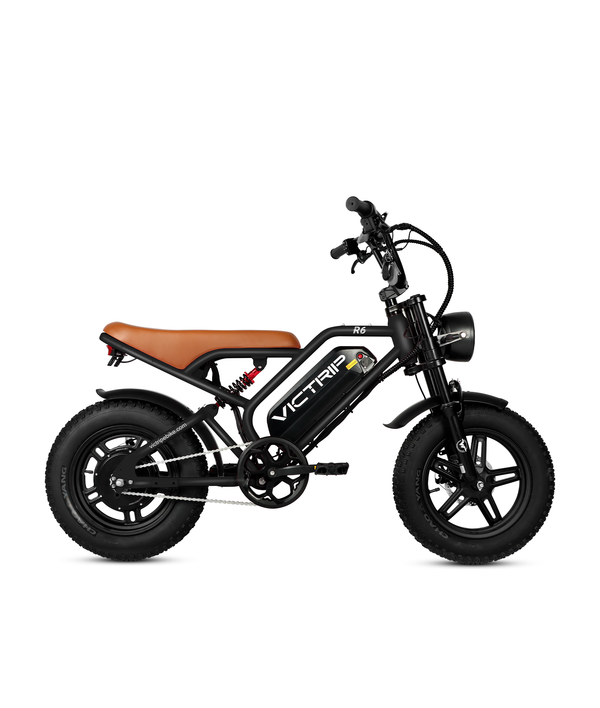
VICTRIP®R6 Moped Ebike for Teens
$799.00
Conclusion: Choosing the Perfect Kids’ Bike
A well-fitted bike transforms riding from a challenge into a joy. By using a reliable kids’ bike size chart and focusing on height, inseam, and confidence—not just age—you’ll set your child up for success. Take the time to measure, compare, and choose wisely. Your child’s smile on their first smooth ride will make it worth it.
FAQs
1. Should my child’s feet touch the ground on a bike?
Yes. Especially for beginners, flat-foot contact boosts confidence and safety.
2. Is a kids’ bike size chart reliable?
Absolutely—when based on height and inseam, not age alone.
3. Can training wheels fix a bike that’s too big?
No. Training wheels don’t compensate for poor sizing.
4. How long will a kids’ bike last?
Typically 2–3 years, depending on growth.
5. Are heavier bikes harder for kids?
Yes. Lightweight bikes are easier to control and safer.
Share:
Do You Need a License for a Street Legal Electric Dirt Bike?
Ebike Trailers for Groceries, Gear, and Adventures