

An electric dirt bike range depends on more than just battery size. In simple terms, range is the distance you can ride before the battery needs a recharge. For many riders, that number looks different on pavement, trails, hills, and soft ground. That is why one bike may feel strong on a smooth loop but fade quickly on a muddy climb. The U.S. Department of Energy notes that EV range changes with driving style, temperature, terrain, speed, and load, and those same ideas apply closely to electric dirt bikes too.

When people ask, “How far can you ride?” the honest answer is: it depends. Some bikes are built for short, hard hits of power. Others are tuned for longer trail sessions. Battery capacity, rider weight, riding surface, and weather all shape the final result. In cold conditions, EV range can drop sharply; the Department of Energy says range can fall by up to 32% in freezing temperatures.
That means electric dirt bike range is not a fixed promise. It is a moving target shaped by how you ride, where you ride, and how well you care for the battery. The good news is that once you understand the basics, you can make smart choices and squeeze more distance out of every charge.
What Actually Changes Electric Dirt Bike Range?
The biggest reason electric dirt bike range varies is simple: energy use is not constant. A battery can deliver power quickly or slowly, but the more force the bike needs, the faster the charge disappears. The Department of Energy explains that range is affected by speed, temperature, cargo load, driving habits, and environmental conditions.
Off-road riding adds even more strain. Loose dirt, steep hills, sharp turns, deep sand, and repeated acceleration all force the motor to work harder. On a trail, the bike may need bursts of torque again and again, which is exciting but expensive in battery terms. That is why a calm, steady ride often goes farther than an aggressive one.
Battery Size
Battery size is one of the clearest range clues. A larger battery usually stores more energy, which often means longer ride time and more miles. The U.S. Department of Energy explains battery capacity as a key part of how far an electric vehicle can travel.
Still, battery size alone does not tell the whole story. A small but efficient bike can sometimes outlast a larger, heavy-hitting machine if the rider stays smooth and the terrain is forgiving. So when shopping, look at capacity and efficiency together, not just the biggest number on the spec sheet.
Motor Power and Riding Mode
More power often means more fun, but it also means more energy use. High-output motors can drain a battery quickly when the rider uses full throttle, repeated launches, or uphill climbs. The Department of Energy notes that range is strongly shaped by driving habits and power demand.
Many electric dirt bikes also come with ride modes. A lower-power mode can stretch range, while a sport mode may cut it down. That trade-off is normal. In practice, riding mode works like a volume knob for battery use: turn it up, and the bike feels sharper but travels less far.
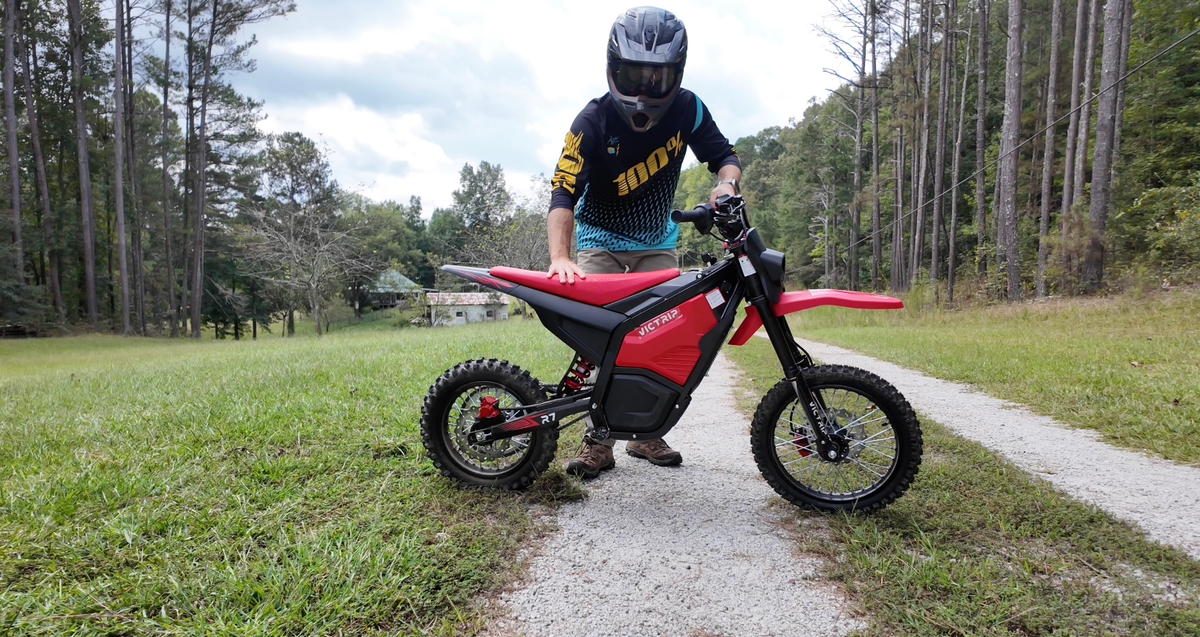
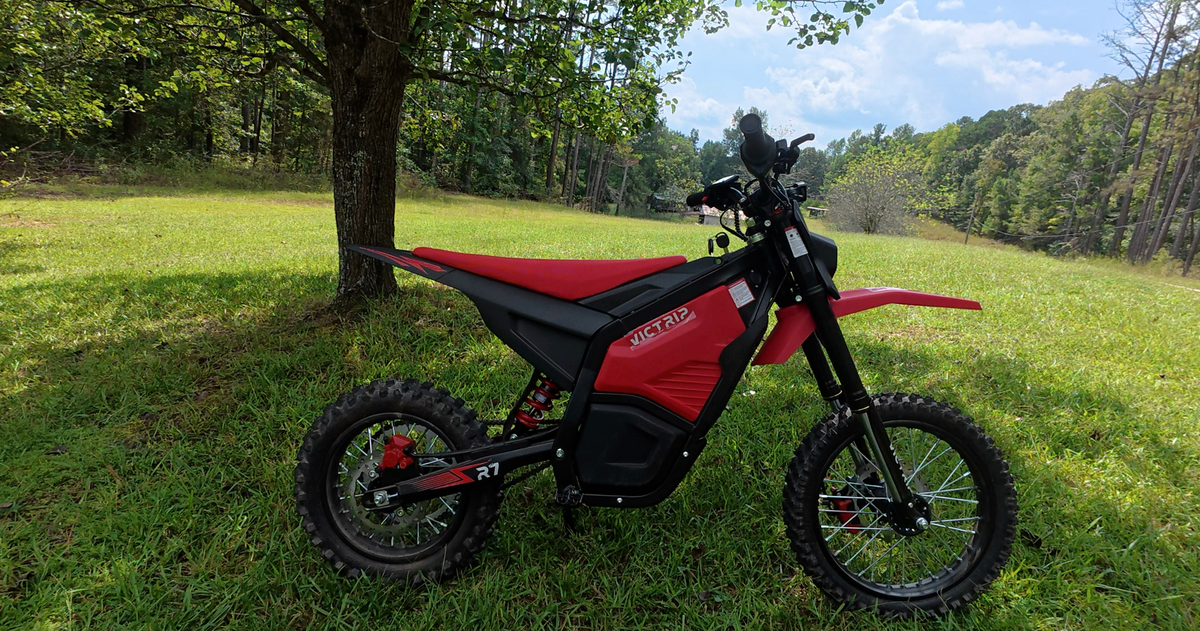
Bikes such as the VICTRIP R7 Pro also offer multiple riding modes, allowing riders to balance powerful acceleration with improved battery efficiency depending on the terrain.
Terrain and Traction
Terrain has a huge effect on electric dirt bike range. Smooth ground lets the bike roll more easily. Deep sand, mud, wet grass, and steep climbs create drag and resistance, which forces the battery to work much harder. The Department of Energy repeatedly identifies terrain and environmental conditions as important range factors.
Traction matters too. When the rear wheel slips, energy gets wasted. If the tire is digging through loose soil instead of pushing the bike forward cleanly, range drops. That is why off-road range can be wildly different from one trail to the next, even on the same bike.
Rider Weight and Cargo
A heavier total load requires more power. That includes the rider, gear, backpack, tools, and any other cargo. The Department of Energy says load and auxiliary demands can reduce range in electric vehicles, and the same logic applies here.
This does not mean a bigger rider cannot get good range. It simply means the bike uses more energy to move more mass. If you carry less weight and keep the bike balanced, you usually get better efficiency. Small changes add up faster than most riders expect.
Speed and Throttle Use
Speed is one of the quickest ways to burn battery. Faster riding creates more resistance, and sharp throttle inputs demand immediate power. The Department of Energy notes that aggressive driving and higher speeds reduce range in electric vehicles.
On a dirt bike, the same rule applies even more strongly because acceleration is frequent. If you pin the throttle over and over, the battery drains fast. If you ride with a lighter hand and carry momentum through corners, you usually go farther. That little bit of discipline makes a real difference.
Temperature and Weather
Weather can quietly ruin range. Cold temperatures are especially tough on battery performance. The Department of Energy says EV range can drop by up to 32% in freezing weather, and cold conditions increase the load on the battery and thermal systems.
Heat can also stress the pack, especially if a bike is stored in poor conditions or charged immediately after a hard ride. The best approach is simple: avoid extremes when you can, and let the battery live in a moderate environment. That helps both short-term range and long-term battery health.
How to Estimate Real-World Electric Dirt Bike Range
The smartest way to estimate range is to start with the manufacturer’s claim, then reduce it based on your actual riding style. If the advertised number is measured in ideal conditions, your trail rides will almost always come in lower. That is normal, not a defect. Public EV guidance from the Department of Energy and AFDC repeatedly shows that range changes with weather, speed, terrain, and habits.
A practical rule is to ask three questions. First, is the ride flat or hilly? Second, is the ground hard-packed or loose? Third, will you ride gently or aggressively? The more demanding the answer, the lower the range. That makes planning easier and keeps surprises to a minimum.
For trail riders, this means range should be treated like a comfort zone, not a hard guarantee. If a bike is rated for a certain distance, plan a buffer for real trail conditions, especially in cold weather or high-speed riding. That buffer keeps you from running the battery too low far from home.
Typical Range Benchmarks by Riding Style
Range benchmarks are most useful when they are framed by use case. A short urban-style ride on smoother ground may go much farther than a steep, technical trail session. The Department of Energy states that many modern EVs are designed for a wide range of mileage outcomes depending on use, and that same spread is useful to remember here.
For light riding, such as relaxed cruising on packed dirt, the bike should generally perform better than in aggressive trail use. For technical off-road riding, expect a shorter distance because the motor works harder with every climb, launch, and correction. In other words, the more the terrain fights back, the faster the battery drops.
Battery Care Tips That Help You Ride Farther
Battery care matters more than many riders think. The Department of Energy explains that battery life is affected by charging patterns, climate, chemistry, and thermal design. Good habits can preserve performance and help you keep better range over time.
Charge before the battery is completely drained whenever possible. Avoid leaving the pack empty for long periods. Store the bike in a moderate temperature range, and let it cool before charging after a hard ride. These are small habits, but they help protect the pack and keep range more stable across the season.
It also helps to use the charger correctly and avoid unnecessary stress on the battery. The Department of Energy notes that modern EV batteries are designed for long life, and several manufacturers back them with long warranties. In moderate climates, predictive modeling cited by DOE suggests batteries may last 12 to 15 years, though extreme climates shorten that estimate.
Riding Habits That Save Miles
Smooth riding saves power. That sounds obvious, but it is the easiest way to improve electric dirt bike range without buying anything new. Smooth throttle control, steady cornering, and smart line choice all reduce wasted energy. The AFDC says aggressive driving, high speeds, and terrain can all cut range, which makes gentle control a real advantage.
Try to keep momentum instead of stopping and launching again and again. Avoid unnecessary bursts of full throttle. Pick lines that reduce drag. On hills, carry speed when safe rather than forcing the motor to do all the work. Those little moves stack up over a long ride.
Charging Smarter for Better Endurance
Charging habits matter just as much as riding habits. The Department of Energy recommends sensible charging practices in winter and notes that charge level and use patterns affect battery behavior. For many users, keeping the battery within a practical operating range is smarter than constant full-to-empty cycling.
If you know you have another ride soon, charge enough for the next outing instead of pushing the pack through unnecessary stress. Also, avoid charging in extreme cold if the bike has been sitting outside. A little planning keeps the battery happier and the range more dependable.
When Electric Dirt Bike Range Starts to Fade
A fading battery usually shows up in simple ways. The bike may not go as far on the same route. Acceleration may feel weaker. Charging may seem less consistent. Those are all clues that the pack is aging or that the bike needs a checkup. The Department of Energy notes that battery performance is tied to age, driving and charging patterns, and climate.
If range drops suddenly, do not assume the battery is done. Tire pressure, braking drag, cold weather, and riding style can all be part of the problem. Start with the basics before you blame the pack. That simple step saves time and money.
FAQs
1. How far can an electric dirt bike go on one charge?
It depends on battery size, terrain, speed, rider weight, and weather. Real-world range is usually lower than ideal-condition claims because off-road riding creates more resistance and higher power demand.
2. Does cold weather reduce electric dirt bike range?
Yes. Cold temperatures can reduce range significantly. The Department of Energy says EV range can drop by up to 32% in freezing temperatures.
3. Do hills drain the battery faster?
Yes. Hills increase load, and that makes the motor work harder. Steeper climbs usually mean shorter range.
4. Does rider weight matter?
Yes. More total weight usually means more energy used to move the bike, which can reduce range.
5. Is full throttle bad for range?
For range, yes. Frequent hard throttle use drains the battery faster than smooth riding.
6. How can I make my electric dirt bike last longer?
Use smoother throttle control, avoid extreme temperatures, charge sensibly, and store the battery properly. Those habits help both range and battery health.
Conclusion
Electric dirt bike range is never just one number on a page. It changes with the battery, the motor, the trail, the weather, and the way you ride. That is why the smartest riders look beyond the spec sheet and think about real-world conditions. The Department of Energy’s guidance on EV range makes the pattern clear: speed, terrain, temperature, and driving habits all matter.
The best takeaway is simple. Ride smoothly, keep the battery cared for, respect cold weather, and plan for a little less than the brochure suggests. Do that, and electric dirt bike range becomes easier to predict and much easier to enjoy. For a government-backed overview of battery range and temperature effects, see the U.S. Department of Energy’s Electric Vehicle Battery Drains resource.
Share:
Electric Dirt Bike vs Electric Mountain Bike: What's the Difference?
Electric Dirt Bike for Adults What Size Is Right for You