


Choosing the right eBike for delivery work can transform a chaotic shift into a smooth, profitable day. This guide covers everything you need — from battery math to payload realities, legal considerations to two powerful product picks — so you can make a confident purchase that earns back its cost in reliability and speed.
Why delivery riders choose eBikes
EBikes are increasingly the vehicle of choice for couriers and gig riders because they blend speed, low operating cost, and flexibility. They let riders cover more ground than traditional bikes, reduce fatigue on long shifts, and can often beat cars in dense urban zones by using bike lanes, skipping parking searches, and making tight deliveries faster. Many delivery operations report higher daily order totals per rider once eBikes are introduced.
Core decision factors at a glance
Before deep-diving, here's a quick checklist so you know what to compare:
-
Real-world range (miles per charge)
-
Battery capacity (Wh) and whether it's swappable
-
Payload capacity (including rider + cargo)
-
Motor power and torque (start-up & hill performance)
-
Frame ergonomics for long shifts (stand-over height, seat adjust)
-
Brakes and tires that stop great while loaded
-
Weatherproofing and IP ratings
-
Maintenance & spare parts availability
-
Legal class for your jurisdiction (Class 1/2/3)
-
Total cost of ownership (battery replacements, tires, accessories)
Range & battery: the heartbeat of delivery
Range is the single most important spec for delivery work because downtime equals lost income. Battery capacity is usually expressed in watt-hours (Wh). Mid-range batteries (roughly 500–700 Wh) typically provide 40–70 miles of range under mixed riding conditions; very large packs or dual-battery setups can double that under ideal conditions. Real-world range will vary with rider weight, cargo load, terrain, temperature, and how much throttle vs. pedal-assist you use. For many multi-hour delivery shifts, aim for an effective daily usable range comfortably above your expected route mileage — ideally 1.25× to 1.5× your typical route to leave margin.
Practical tip: a removable battery that you can swap or charge off-bike is a huge ops advantage for shift-based delivery services.
Payload & cargo solutions
Payload capacity determines how much cargo plus rider the eBike can safely carry. Cargo e-bikes and longtails often advertise payloads from 300–550 lbs (including rider) depending on the frame and build. But note: advertised payload includes the rider — so if you weigh 180 lbs and the bike's payload is 450 lbs, you have ~270 lbs left for cargo and accessories. Balance is crucial: keep heavy loads low and centered to preserve handling.
Accessory choices (rear boxes, front trays, insulated bags) change how you use that payload. Choose modular racks and locking systems so you can configure the bike for small food runs or larger grocery deliveries.
Motor power, torque, and hill performance
Motor power is often stated in watts, but torque (Newton-meters, Nm) matters most for acceleration and climbing with a load. For delivery use in hilly cities or for heavier loads, look for higher torque figures and mid-drive motors, which multiply gear leverage for better hill climbing. Hub motors can be simpler and cheap, but mid-drives usually outperform on sustained climbs and when carrying heavy payloads. If your area has steep climbs, prioritize torque and consider a higher-powered motor to prevent frequent battery-draining high-effort starts.
Frame type & ergonomics for long shifts
Step-through frames make mounting and dismounting quicker when you’re hopping on/off for short deliveries. They also reduce strain, which can matter over many stops. However, step-over (diamond) frames can offer stiffer handling for heavy cargo. Consider adjustable stems and saddle setups so the rider can dial in posture — a neutral, slightly forward stance reduces wrist and lower back strain over an eight-hour shift.

Brakes, tires, suspension — safety hardware
Stopping power when loaded is non-negotiable. Hydraulic disc brakes with adequately sized rotors (e.g., ≥180 mm) give better fade resistance than mechanical options. Tires designed for puncture resistance and load — wide tires (e.g., 2.3–4.0") with robust casing — are calmer when cornering under weight. Suspension forks or seatposts smooth out potholes and protect fragile cargo, though they add weight and complexity.
Weatherproofing, maintenance, and uptime
Weatherproofing (sealed connections, IP-rated components) reduces service interruptions. Routine maintenance items — brake pads, tire replacements, chain wear, and battery health checks — should be planned into operating budgets. A design with widely available spare parts or local dealer support will dramatically increase uptime and reduce total costs. Many commercial delivery operators choose models with swappable batteries and simple, modular electronics for this reason.
Legal, insurance & rider registration basics
E-bike laws differ by state and locality. Many U.S. states use a three-class eBike system that differentiates top-assisted speeds and throttle allowance; in some areas, registration, licensing, or insurance may be required depending on the eBike specs and local rules. Always check local regulations before deploying a fleet — noncompliance can lead to fines or impounded bikes.
Cost, ROI, and total cost of ownership
Total cost includes purchase price, accessories (boxes, lights), consumables (tires, brake pads), and battery replacement (batteries are often the most expensive recurring cost). Calculate ROI by estimating increased orders per hour, average delivery fee, and reduction in other operating costs (e.g., fuel for mopeds). Many delivery-focused eBikes pay back their cost within months when used full-time due to lower operating expenses and higher productivity.
Top 2 Unstoppable Picks: 2 Proven Delivery eBikes
Two powerful picks chosen for range, payload, and load-friendly geometry.
Unstoppable 2 Picks
-
VICTRIP Mimas Torque Sensor Step Thru eBike — Practical long-range cargo step-through
-
Pedal-assist range: up to 130 miles
-
Electric-only range: ~50 miles
-
Top speed: 30 mph
-
Max load capacity: 450 lbs
-
Notes: step-through ergonomics, torque sensor, big payload ideal for mixed food/grocery routes.
-
TOP PICK
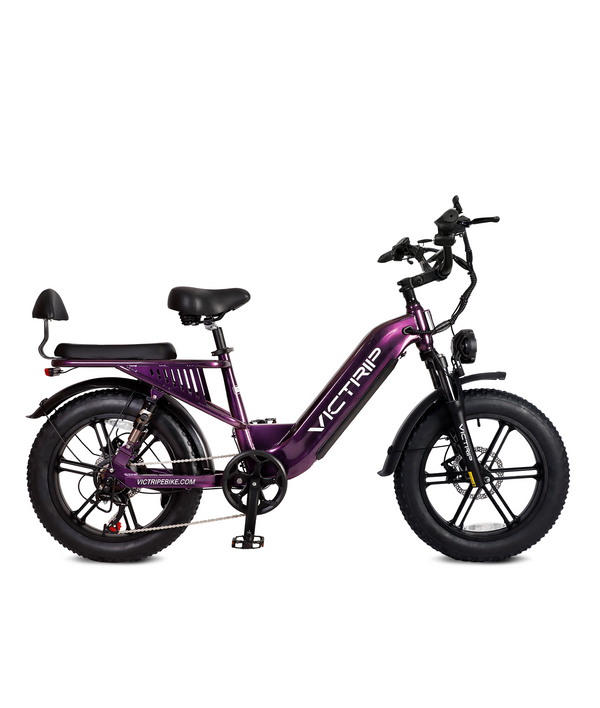
VICTRIP® Mimas Electric Bicycles With Torque Sensors
$1,399.00
-
VICTRIP Titan S Long Range Electric Bike — High-power, long-range option
-
Peak motor: advertised 1000W
-
Top speed: ~30 mph (model claim)
-
Positioning: powerful motor for hilly areas and heavy loads; suited when speed and torque are priorities.
-
TOP PICK
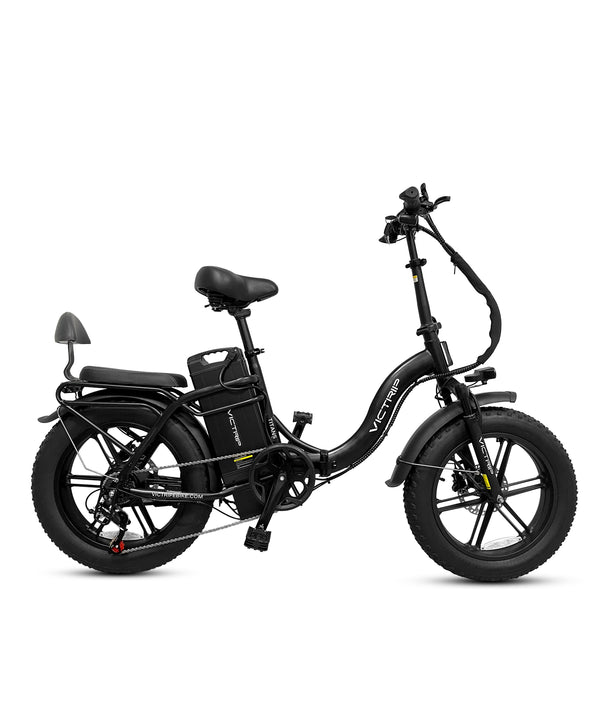
VICTRIP®TITAN S 1000W Ebike
$1,499.00
Why these two? They combine high payload ratings, long-range claims, and purpose-built frames that let delivery riders carry bulk orders without constant battery anxiety. Always verify local legal speed limits and classifier rules before choosing a high-powered model.
How to test-ride and evaluate before purchase
When test-riding, check these items:
-
Acceleration under simulated load (ask vendor to add weight or bring a heavy bag)
-
Brake feel and stopping distance at loaded speed
-
Ease of getting on/off (frequent stops require fast mounts)
-
Battery removal and charging ergonomics
-
Cargo mounting points and box compatibility
-
Visibility and lighting for night shifts
Take photos or notes so you can compare across models. A 10–15 minute loaded test ride that simulates your typical route is far more revealing than a 2-minute showroom spin.
Accessorizing for faster, safer delivery
Accessories matter:
-
Insulated delivery bag or lockable rear box
-
Bright front/rear lights and reflective tape
-
Phone mount + power bank for navigation and apps
-
Robust frame locks and wheel/box locks
-
Puncture-resistant inner tubes or tire inserts
-
Spare battery or quick-swap battery system for continuous shifts
Accessories increase functionality but also weight — balance the tradeoff between utility and extra load.
Training, ergonomics and rider health
Training riders on correct mounting, cargo distribution, braking, and cornering under load reduces accidents and equipment wear. Encourage short breaks to reduce fatigue, and use ergonomic grips and saddles to prevent chronic injuries. An ergonomically tuned bike can markedly improve rider throughput and job longevity.
Common mistakes couriers make (and how to avoid them)
-
Buying solely on price — cheap bikes can cost more in downtime.
-
Ignoring real-world testing — don't trust showroom range claims.
-
Underinvesting in accessories like quality lights and locks.
-
Overloading or poor load distribution — leads to handling issues.
-
Skipping local law checks — can cause fines.
Avoid these and your eBike will be an asset, not a liability.
Conclusion: pick, prep, and ride confidently
Choosing the best eBike for delivery work means balancing range, payload, motor torque, and legal compliance with your rider workflows. Prioritize real-world testing, modular cargo solutions, and a bike platform with good service support. If you want a quick starting point: aim for a bike with at least a 500–700 Wh battery (or swappable dual batteries), a payload rating that leaves ample cargo capacity after subtracting rider weight, and hydraulic disc brakes for dependable stopping while loaded. Source parts locally and train riders — these operational details drive ROI just as much as spec sheets.
FAQs
How far will an eBike go on a single charge for delivery runs?
Typical real-world ranges vary from ~25 to 130+ miles depending on battery size (Wh), rider weight, cargo, terrain, and assist level. Mid-range batteries (500–700 Wh) commonly deliver 40–70 miles in mixed-use conditions; larger or dual-battery systems extend that further.
Do I need a license or registration to use an eBike for deliveries?
It depends on your state and local rules. Many U.S. states follow a three-class system that affects speed and throttle legality; some jurisdictions require labeling, registration, or insurance. Always check local rules before operating commercially.
Are hub motors or mid-drive motors better for delivery?
Mid-drive motors are generally better for hill climbs and heavy payloads because they leverage the bike’s gears; hub motors are simpler and cheaper but can struggle on steep inclines when heavily loaded. Choose based on terrain and expected payload.
How much cargo weight can I carry safely?
Payload limits vary widely: many cargo e-bikes are rated for 300–550 lbs total (rider + cargo). Check the manufacturer spec and plan load distribution carefully.
Is a powerful 1500W eBike legal everywhere for delivery use?
No — many jurisdictions cap eBike motors at 750W for classification as an eBike. High-power models may be treated as mopeds or require registration and insurance. Confirm local regulations before purchase.

Share:
Is VICTRIP a Good Electric Bicycle Brands? Honest Buyer’s Guide
Best E-Bikes to Buy as New Year Gifts in 2026