


If you plan to ride in European cities, you’ll often see product specs saying a motor is “250W” and that assistance cuts out at 25 km/h. That’s no accident — it’s the rule that keeps most electric bicycles classified as bicycles rather than motor vehicles. In practice, this classification means you don’t need registration, a driving license, or insurance in many EU countries (though local rules can vary). The relevant European standard for electrically power-assisted cycles (EPAC) is EN 15194; it enshrines the 250W continuous rated power and 25 km/h assist cutoff as defining limits for the class.
Why this matters: if a folding e-bike is built to EPAC/EN15194 limits, it’s easier to use for everyday urban travel — you’ll avoid extra paperwork and you’ll be treated like a cyclist in traffic. Conversely, bikes that exceed these thresholds may be treated as mopeds or light motor vehicles and then become subject to much stricter rules. Keep that trade-off in mind when you compare models.
1. What “EPAC / EN15194” means for riders
In short: EPAC stands for Electrically Power Assisted Cycle, and the EN 15194 standard sets safety and performance test requirements for these bikes. Meeting that standard usually means the bike is CE marked for Europe and is legally sold as an e-bike under the common rules. The standard also covers electrical safety, mechanical integrity, and testing of the motor-assist system. If you see EN15194/EPAC compliance noted clearly, that’s a strong sign the bike is designed for EU daily use.
2. Who should choose a 250W folding e-bike — use cases
A 250W folding e-bike is ideal when you want the best mix of legality, portability, and practical assistance:
-
Commuters who need a compact bike for last-mile legs and tram/rail carriage.
-
Apartment dwellers who lack secure outdoor storage and need to carry the bike upstairs.
-
Multi-modal travelers who combine cycling with public transit.
-
Urban couriers or people who need a nimble, legal e-bike for dense city traffic.
These bikes won't be the choice for aggressive off-road riding or steep mountain climbs with heavy loads — they’re optimized for pavement, short to mid-range commutes, and legal convenience.
3. Key components to check (frame, motor, battery, brakes, folding)
When choosing any folding e-bike, you should evaluate several components carefully — each affects safety, reliability, and daily convenience.
3.1 Motor & power specs explained
The advertised “250W” on EU models usually refers to continuous rated power rather than peak output. That difference matters because many small motors can deliver higher short-term peaks but remain EPAC-compliant as long as continuous power is within 250W and assistance cuts out at 25 km/h. Look for wording like “250W continuous” or explicit EPAC/EN15194 certification.
Practical advice:
-
Prefer torque-sensor or cadence-sensor setup depending on riding feel you like.
-
Check whether the motor is hub-driven or mid-drive — hub motors are common on folding bikes for compactness; mid-drives usually deliver better hill performance but complicate the drivetrain.
3.2 Battery, range, charging and real-world expectations
Battery specs (voltage × amp-hour) give you energy capacity. Manufacturers often quote theoretical ranges that assume near-ideal conditions. Expect these real-world factors to reduce range: rider weight, terrain, cadence, assist level, wind, and cargo. A 48V 10–20 Ah pack can typically give anywhere from 40–100 km under mixed conditions — but always treat manufacturer ranges as optimistic.
Practical battery checklist:
-
Battery weight and where it’s mounted (frame-integrated vs. removable).
-
Charging time and whether the battery is removable for convenient charging at a desk.
-
Availability and cost of replacement batteries.
3.3 Frame, weight, and foldability considerations
Folding mechanism quality matters as much as claimed fold size. Cheap latches can rattle or fail; look for robust hinges, clear locking points, and a design that folds in a few seconds without tools. Weight is critical — a 20–25 kg folding e-bike can still be bulky to carry up stairs. If you’ll be lifting the bike frequently, prioritize lighter builds and smaller folded volume. Also verify folded dimensions so it fits in your locker, trunk, or public transit storage. Product pages often list folded dimensions — verify them in the spec sheet.
3.4 Brakes, tires, lights, and safety kit
For urban speed and wet-weather stops, hydraulic disc brakes are preferable; mechanical discs are a solid compromise if you want lower maintenance cost. Tires: wider urban tires (1.75–2.4") give comfort and stability but add rolling resistance; puncture protection is a nice-to-have. Integrated lighting, reflective elements, and a bell are small details that make an everyday bike usable and safe.
4. Top EU-legal 250W folding e-bike picks (detailed)
Below you’ll find a practical pick and a set of runner-up categories. Note that model availability and exact EU-specific spec sheets can vary, so always confirm the seller’s EU version (250W / 25 km/h setup) before ordering. For certifications and EN/EPAC claims, check the seller spec sheet or product label.
4.1 VICTRIP T6 Folding Electric Bike — EU model overview & why it's recommended
Why include it: VICTRIP’s EU store lists several folding and fat-tire models tailored for Europe. The T6 folding model is positioned as a commuter-friendly option with robust battery choices and foldability for transit and storage; when offered in the EU-tuned variant, it’s built to meet local EPAC expectations. If the vendor explicitly lists a 250W continuous motor and a 25 km/h assisted cutoff, that’s the EU-legal configuration you want.
What to check on the VICTRIP T6 product page before buying
-
Confirm the EU-specific motor rating (250W continuous).
-
Confirm the assist cutoff (25 km/h) and whether the bike uses pedal-assist only.
-
Verify EN15194 or EPAC certification claims on the EU-specified page.
-
Confirm battery capacity and removable battery options, plus warranty terms.
TOP PICK
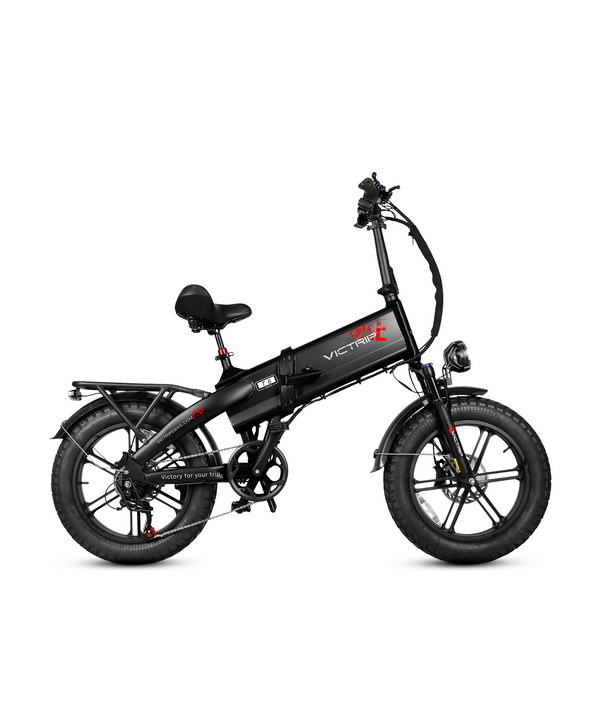
VICTRIP® T6 250W Long Range Ebike
€1,599.00
Typical pros & cons (generic guidance applicable to many folding e-bikes):
-
Pros: Portability for mixed-mode commuting; legal classification as a bike when tuned to EPAC; often modular battery and compact storage.
-
Cons: Folding mechanisms and hinges add complexity; peak power might be higher than rated but continuous power and speed limit are what matter legally.
4.2 Practical runner-ups and categories to consider
Rather than listing many specific models (some vendors list both EU and non-EU variants), consider these categories and representative brands you can verify on EU sites:
-
Premium compact folder (urban commuters): Look for lightweight frames, integrated battery, and quick-folds for short commutes.
-
Fat-tire folders (comfort + stability): Wider tires for cobbles and rougher surfaces; heavier but comfortable.
-
Travel-friendly hybrids: Slightly bigger wheels but still foldable; good for commuters who want more speed.
-
Value folders: Lower price, basic components—fine for short, flat commutes but consider upgrades.
When choosing a runner-up model, verify the vendor’s EU-specific listing, the certification claims, and user reviews in your country.
5. How to test and inspect a folding e-bike before buying
When you test-ride or inspect a folding e-bike in person or at a retailer, check the following:
-
Folding mechanism: Fold and unfold it yourself several times; it should lock solidly and not require brute force.
-
Ride feel: Test the pedal-assist across assist levels; it should start smoothly when you pedal and stop assisting at the legal cutoff if it’s EU-tuned.
-
Brakes & handling: Test emergency stops and low-speed maneuvers.
-
Build and finish: Look for creaks or flex at hinges and clamps.
-
Accessory compatibility: Confirm rack, mudguard, and light mounts if you need them.
If ordering online, ask the seller for video proof of the EU-tuned model running to 25 km/h assist cutoff and a copy of any certification or declaration of conformity.
6. Maintenance, warranty, and aftercare for long life
To keep a folding e-bike reliable for daily travel:
-
Battery care: Charge regularly, avoid full deep discharges, and store at moderate temperatures.
-
Hinge & latch maintenance: Regularly inspect and lightly grease hinge bearings (manufacturer guidance first).
-
Brake adjustments: Disc brakes need occasional pad alignment and periodic bleeding (hydraulic).
-
Firmware & motor checks: Some hubs and controllers have firmware updates; authorized dealers can do these.
-
Warranty: Check what the warranty covers (frame, battery, motor) and how long the dealer is responsible for after-sales repair.
If you rely on your e-bike daily, choose a seller with good local service or accessible spare parts.
7. Riding tips: maximize range and safety during daily travel
-
Use moderate assist levels when you need longer range; reserve higher assist for starts and hills.
-
Keep tire pressures within recommended ranges to balance rolling resistance and comfort.
-
Fold smart — make sure the latch is fully engaged before lifting or storing.
-
Use lights and high-visibility clothing in low-light urban commutes.
-
Consider a small service plan with your retailer if you ride daily; preventive care beats emergency repairs.
Conclusion — final buying checklist and next steps
To summarize: prioritize safety and legal compliance first — confirm EPAC/EN15194 or explicit EU-spec tuning (250W continuous, 25 km/h cut-off). Next, match frame/fold size and weight to your storage and commuting profile. Check battery capacity and whether the battery is removable, test the folding mechanism, and confirm dealer support and warranty. If you want a practical model to start with, confirm the EU-specific listing and certification for the VICTRIP T6 (or any other model) before purchase. Always verify the seller’s EU product page and documentation.
FAQs
Q1: Are all 250W e-bikes automatically legal across the entire EU?
A1: Not automatically. A bike must meet the EPAC/EN15194 criteria (250W continuous, 25 km/h assist cutoff, pedal-assist only) and have appropriate conformity documentation to be treated as a bicycle in most EU jurisdictions. Local rules may still vary, so verify national specifics.
Q2: What does “250W” actually mean — peak vs continuous?
A2: “250W” in EU legal context refers to the continuous rated power the motor can deliver. Motors can have higher short-term peaks; what legally matters is the continuous rating and how the assistance is controlled.
Q3: Can I ride a folding e-bike on trains and buses in the EU?
A3: Many regional transit systems allow folding bikes (often free) if compact and covered; e-bike carriage rules vary — always check the transit operator’s rules. Folding form factor helps a lot in multi-modal commutes.
Q4: How much range should I expect from a typical 250W folder?
A4: A practical daily commuter can expect 40–80 km per charge under mixed conditions, depending on battery capacity, terrain, rider weight, and assist usage. Manufacturer ranges may be optimistic.
Q5: Is a hub motor or mid-drive better for a folding commuter?
A5: Hub motors are common in folding bikes for compactness and fewer drivetrain implications. Mid-drives offer better hill performance but add complexity and can reduce folding simplicity.
Q6: How can I verify the EU-spec version of a model sold online?
A6: Ask the seller for an explicit EU-spec spec sheet showing 250W continuous motor rating, 25 km/h cut-off, EN15194/EPAC claims, and any local declarations of conformity. If unavailable, consider buying from authorized EU dealers.
Share:
Understanding CE Certification for European eBikes
Best Lightweight Folding eBikes in Europe